
Kangara, usually a place of early-morning sounds—the clatter of steel plates, the laughter of children running across fields, the distant hum of tractors—woke on this day under a blanket of haunting silence. The sky was overcast with thick monsoon clouds, as though nature itself had bowed its head in mourning. Every household opened its doors slowly, every person stepped out with subdued steps, and even the air seemed heavy, carrying the solemn knowledge that Kangara was about to witness the final journey of its brave son, Captain Traja.

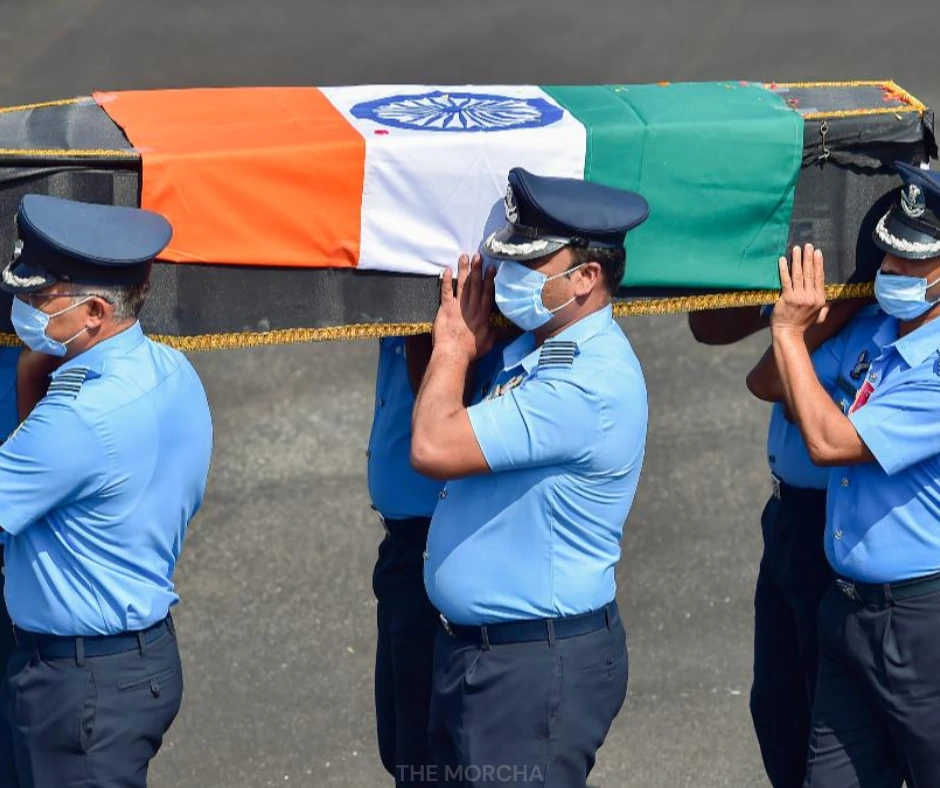
He was not returning triumphant in uniform, not walking tall as he always had, but returning draped in the tricolor—his last homecoming, marked by honor yet overshadowed by sorrow. The village knew that today was not just another day; it was a day etched forever in its collective memory.
Table of Contents
The Dreamer Who Reached the Sky
Long before he became Captain Traja, the village’s pride, he was simply a boy with stars in his eyes and the sky in his heart. From early childhood, he would sit outside his home watching airplanes pass overhead, his face lighting up with wonder. He sketched aircraft in his notebooks, asked endless questions about flying, and kept newspaper cuttings about the Indian Air Force. His teachers remembered him as a disciplined student, focused and respectful, the kind of boy who balanced ambition with humility.
His dream was not just to fly; his dream was to serve the nation. When he told his father, “One day, I will fly for India,” his father smiled with pride, unaware that destiny would one day take that dream and turn it into both glory and grief. But from the very beginning, Traja’s path was clear—he was meant to rise beyond the boundaries of Kangara and touch the skies.
A Path Prepared for a Hero’s Return
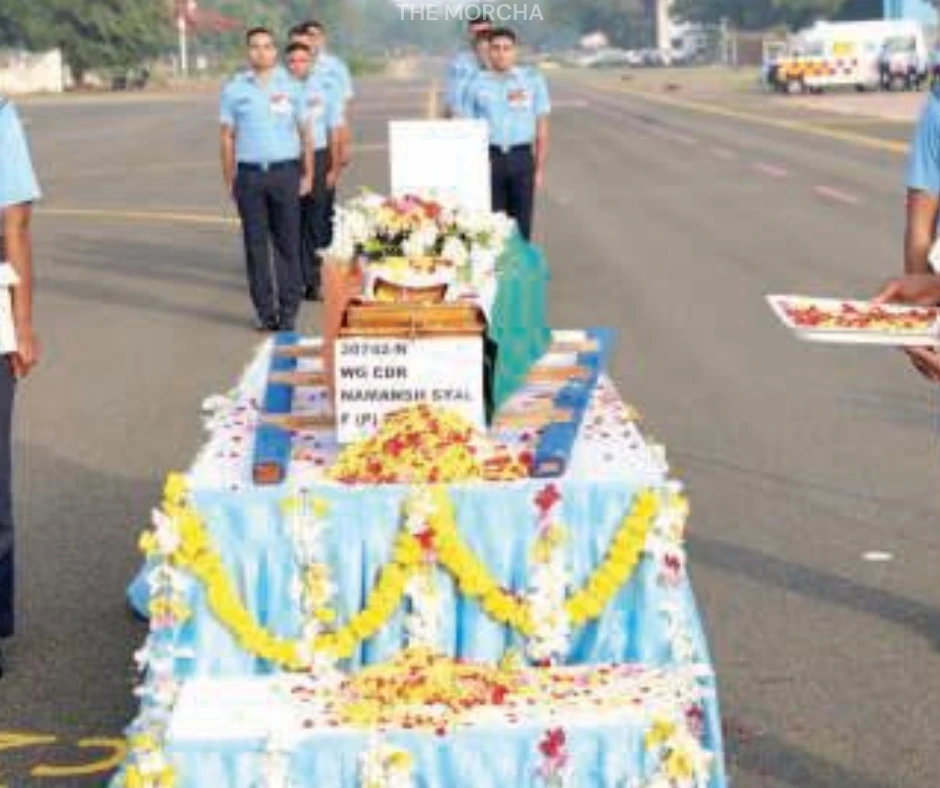
As news spread of Captain Traja’s mortal remains arriving, Kangara transformed into a village preparing for a revered guest. Men cleaned the roads meticulously, laying fresh soil to prevent dust from rising during the procession. Women arranged plates with flowers, incense, and lamps, ready to welcome him home in the most sacred manner.
Children helped string marigold garlands that swayed in the wind like silent prayers. The tricolor fluttered from rooftops and school buildings, a reminder of the honor that Traja had brought to his birthplace. But beneath the preparations was a deep, unspoken sorrow. Every garland tied, every flower placed, every flag raised was done with trembling hands, for the people of Kangara knew they were preparing not for celebration but for farewell.
The Moment the Coffin Arrived
When the military convoy finally appeared at the village gate, a wave of stillness swept through the crowd. The sound of boots marching in perfect rhythm echoed through the fields as uniformed soldiers walked beside the vehicle carrying the coffin. The tricolor covering the coffin fluttered gently, glowing with dignity against the gray sky.
As it came closer, the silence broke. Mothers began to cry, men wiped their eyes openly, and the village seemed to exhale its grief all at once. Shouts of “Shaheed Traja Amar Rahe” and “Vande Mataram” rose from the crowd, not as rehearsed chants but as raw expressions of love and loss. It was a moment where the air felt heavy with pride and heartbreak, a moment that no one present would ever forget.
Parents Who Carried Pride and Pain Together
Traja’s mother stood in front, supported by relatives. Her steps were unsteady, her breath shallow, her eyes swollen from days of sleepless crying. When she finally touched the coffin, her body shook with grief, and her cries cut through the air like a blade. She whispered to him, as if he were simply sleeping, begging him to wake up, to speak, to smile—anything. His father stood beside her, stoic yet trembling, holding her shoulders firmly.
His silence spoke volumes. He was a man torn between pride for the hero he raised and the immeasurable pain of losing his eldest son. Together, they represented every parent who had ever watched their child wear the uniform and prayed for their safety. Today, their prayers had taken a painful turn, yet not once did their eyes lack the pride that their son had died serving the tricolor.
Siblings Who Grew Stronger in One Day
Behind the grieving parents stood Traja’s younger siblings. His sister, barely old enough to understand the enormity of loss, clung to her mother’s saree, her small shoulders shaking with sobs. His brothers tried to stand tall, mimicking the soldiers surrounding them, but their eyes revealed the emotional storm inside them. They stared at the tricolor-draped coffin, their faces reflecting the realization that their world had changed forever. Childhood had ended for them in that instant. The loss carved a space in their hearts, but within that space, something else took root—a resolve to honor their brother’s legacy.
The Salute That Echoed Across the Fields
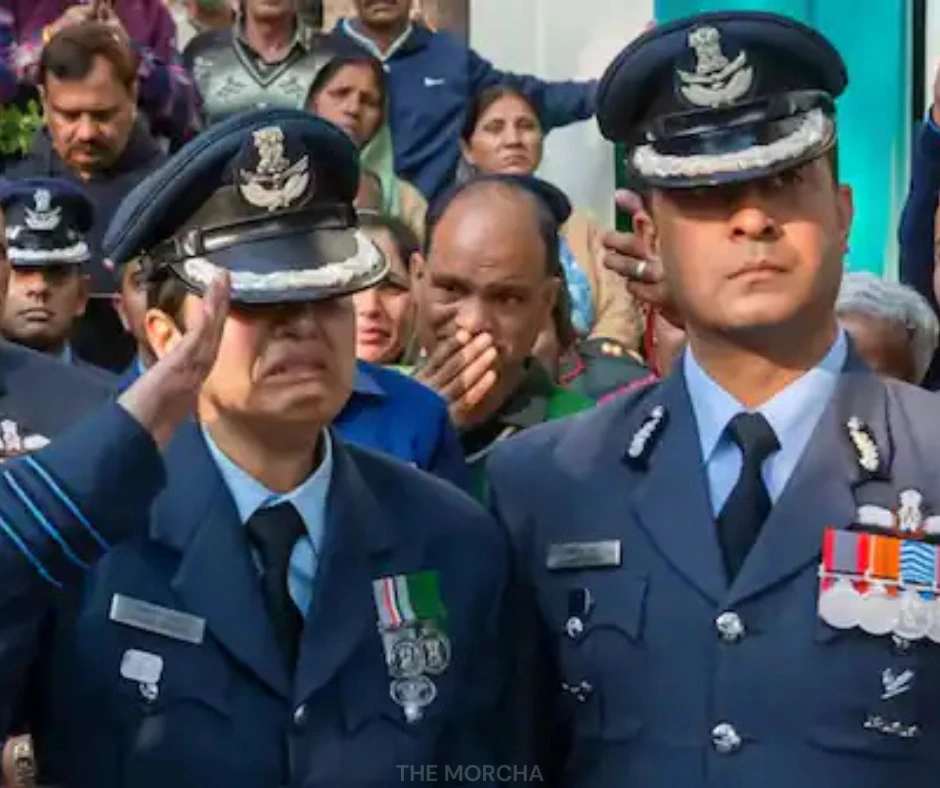
The soldiers formed a straight line on either side of the coffin. When the bugle sounded, its haunting melody flowed through the air like a sorrowful hymn. The villagers, many hearing such a ceremony for the first time, felt a wave of awe and grief wash over them. Then came the gun salute—a series of sharp, echoing shots that cracked through the stillness, symbolizing respect, honor, and sacrifice. Each shot seemed to strike the hearts of those standing there, reminding them of the cost of freedom. The ceremony was not just military formality—it was a tribute that carried centuries of tradition, discipline, and the silent promise that a soldier’s sacrifice would never be forgotten.
Veterans Saluting a New Martyr
Among the villagers were elderly men who had once served in the armed forces. Age had bent their backs, slowed their steps, and dimmed their eyesight, but as they moved forward to salute Captain Traja, their posture straightened, and their salute was crisp and steady. For a brief moment, they shed the weight of their years and stood as soldiers again, paying respect to the young man who had joined the immortal ranks of martyrs. Young boys watched them with admiration, imitating their salute—small gestures that hinted at the inspiration being planted silently in their hearts.
His Final Mission
As details of Captain Traja’s final mission became known, respect for him deepened even further. He had been executing his duty with flawless precision when fate dealt a cruel blow. Yet even in those final moments, he remained calm, composed, and responsible. His actions ensured the safety of others and prevented greater harm. His fellow officers recounted how he made critical decisions in the last seconds that reflected exceptional courage and presence of mind. His sacrifice was not an accident of fate—it was the mark of a true soldier who upheld duty until his last breath.
Officers and Batchmates Speak of a Fallen Star
Senior Air Force officers stepped forward to share their memories of Captain Traja. Their voices carried the weight of loss. They spoke about his discipline, his intelligence, his kindness, and how he had been one of the most promising young pilots of his batch. One officer said with a breaking voice, “We lost not just a capable pilot, but a brother.” His batchmates shared stories from training—how he motivated others during tough drills, stayed up nights helping injured cadets, cracked jokes to lighten tense moments, and consistently pushed himself to be better. Through their words, the villagers saw a side of Traja they had never known—the professional, the leader, the friend, the pillar of strength.
The Sacred Walk to the Cremation Ground
When the time came to carry him to the cremation ground, the coffin was lifted gently. Soldiers took one side, family members the other, and together they began the slow, dignified walk. The entire village followed, moving like a river of grief. Along the path, women showered rose petals, children bowed their heads, and elders whispered blessings. People who had never spoken to him shed tears as though they had lost their own son. The air felt sacred, as though every step carried with it memories, prayers, and unspoken promises.
Flames That Became Eternal Light
As the cremation rituals began, the fire slowly built up, its orange glow illuminating tear-streaked faces. When the flames rose high and enveloped the pyre, a heartbreaking hush fell over the village. In those flames burned not just a body, but dreams, laughter, and a lifetime of potential. Yet those same flames also represented valor, honor, and immortality. For in sacrificing his life for the nation, Captain Traja had become a part of something eternal. His story had become one that generations would remember—a story that would outlive the fire that marked his farewell.
A Village That Stayed Even After the Farewell
After the cremation was complete, people did not leave immediately. Instead, they gathered around in small groups, sharing memories and comforting one another. Teachers spoke about his discipline and brilliance. Friends remembered his laughter, his kindness, and his willingness to help. Elders recalled the polite young boy who always greeted them with respect. Each memory added another thread to the tapestry of his legacy. Kangara was grieving, but it was also celebrating the life of a young man who had touched every heart he encountered.
Plans to Preserve His Legacy
That evening, the village panchayat convened, determined to ensure that Captain Traja’s legacy lived on. Discussions flowed with emotion and unity. The villagers proposed memorials, scholarships, events, and institutions in his name. His father, though grieving, spoke with pride, saying that if his son’s story could inspire even one child to serve the nation with honesty and courage, then his sacrifice had meaning beyond measure. His words strengthened the resolve of the village, which vowed to honor Traja not only in stone and ceremonies but in the values they passed on to their children.
A Night of Lamps, Tears, and Prayer
That night, Kangara was illuminated by hundreds of lamps placed outside homes. People sat together, singing patriotic songs, whispering prayers, and sharing stories. Captain Traja’s mother sat by his photograph, touching it gently with trembling hands, lost in memories of her son’s smile, his voice, his childhood mischief. Her tears flowed freely, but beneath her grief lay immense pride. She had raised a son who had become the face of bravery for an entire region. That night, Kangara did not sleep. It remembered.
Tributes From Across the State and the Country
In the following days, tributes poured in from all corners. Newspapers highlighted his courage. Schools observed moments of silence. Officers visited the family. People from distant towns came to pay their respects. His batchmates stayed with the family, recounting stories that brought both tears and laughter. Social media overflowed with messages of honor. Captain Traja had become more than a name—he had become a symbol of sacrifice, bravery, and youth dedicated to the nation.
Kangara Transforms Through His Memory
The months that followed saw Kangara transform in ways no one had anticipated. Donations improved school infrastructure. Youth groups formed to help soldiers’ families. Fitness camps and study circles inspired by Captain Traja became common. Children began writing essays about patriotism and dreaming of wearing the uniform. His influence had begun shaping the future of Kangara, turning it into a village known not only for its fields but also for its hero.
A Memorial That Immortalizes Him
A year later, a beautiful memorial was built at the entrance of the village—a bronze bust of Captain Traja mounted on a granite pedestal engraved with the words “A Hero Lives Forever.” The inauguration ceremony was emotional. The national anthem echoed across the fields, villagers stood with tears in their eyes, and soldiers saluted the memorial of their fallen comrade. The tricolor above the memorial fluttered proudly, as though saluting the hero it overshadowed. The memorial became more than a structure—it became a symbol of eternal pride.
His Legacy Reaches Far Beyond Kangara
Captain Traja’s story traveled far beyond his village. Military academies cited him as a model officer. Teachers used his life as inspiration for students. Youth programs were named after him. His journey became part of motivational speeches across districts. His name found a place in the hearts of people who had never met him but felt connected to his courage. His legacy became one that transcended borders, touching lives far away from Kangara.
A Hero Who Lives Forever
Today, Kangara remembers Captain Traja not just as a martyr, but as a son, a dreamer, a leader, and a source of strength. His story is told with pride to every child growing up in the village. His name is spoken with reverence. His memory lives through the actions and aspirations of the people he left behind. Heroes like him do not fade into history; they become the light that guides future generations. Captain Traja lives on—in every salute, in every flag, in every young heart that dares to dream of serving the nation.
The Village School That Became a Temple of Inspiration
The village school, where Captain Traja had once studied with unmatched dedication, soon transformed into a place of pilgrimage for students, teachers, and even visitors from neighboring towns. His classroom desk was preserved, cleaned regularly, and adorned with fresh flowers by the students who saw him as a role model rather than just a former student. Teachers began narrating memories of his childhood—how he would spend extra hours in the library researching aviation, how he would stay back after school to help weaker students, how he would always submit assignments early and perfectly completed.
These stories were not just recollections; they became lessons in character, perseverance, and patriotism. The school walls were painted with murals of aircraft, pilots, and motivational quotes attributed to Traja. The students walked through the hallways with a sense of belonging to a legacy, knowing that one among them had once risen from these very benches to serve the nation.
The Emotional Transformation of the Youth
The youth of Kangara, who had often been unsure about their future paths, found new direction in the wake of Captain Traja’s sacrifice. Boys who once spent their afternoons idling at tea stalls now engaged in fitness training, inspired by the discipline of military life. Girls, too, began aspiring to join the armed forces, encouraged by the realization that patriotism knows no gender. A sense of purpose settled over the village’s young generation.
They felt connected to something greater than themselves—a mission to honor the memory of a young man who had walked the same roads, studied in the same school, breathed the same air, and dared to dream beyond the confines of his rural upbringing. Captain Traja had become a guiding force, silently encouraging the youth to believe that no dream was too distant, no challenge too great, and no sacrifice too small for the sake of the nation.
His Mother’s Strength Becomes a Beacon
In the months that followed, people expected Captain Traja’s mother to withdraw into silence, to suffer in the shadows of her grief. But instead, she emerged as a symbol of resilience. Though her heart had shattered the day the coffin came home, she slowly began to turn her grief into strength. She attended village gatherings, interacted with schoolchildren, and shared stories of her son’s childhood mischief, dedication, and compassion.
Her voice trembled at times, but her eyes carried a fire that silenced everyone around her—a fire of pride. Mothers from nearby villages visited her, seeking comfort for their own fears about their sons, and she would hold their hands, saying, “Raise them with love and faith. Let them fly. The nation needs them.” Her transformation became a lesson in strength, proving that even in the face of unimaginable loss, the heart can find a way to beat with purpose.
Father’s Silent Promise
While his mother expressed her strength openly, Captain Traja’s father carried his grief quietly, his silence speaking more than words ever could. He resumed tending to the fields, but he worked slower, often pausing to look up at the sky. People in the village would find him staring at passing clouds, as if searching for a shadow of his son in the vast blue. Yet, despite his quiet sorrow, he honored every village request related to memorials, programs, and events.
He gave speeches when needed, though his voice often cracked. He supported every youth who sought his advice about joining the armed forces. His pride in his son outshone his pain. In his silence lived a promise—to uphold his son’s name with dignity and to ensure that the flame of patriotism never dimmed in Kangara.


