
South Africa vs India 2026, cricket enthusiasts around the globe were glued to their screens as South Africa faced India in the Super 8 stage of the ICC Men’s T20 World Cup 2026. This was not just another match; it was a clash of two cricketing powerhouses, bringing together centuries of competitive rivalry and a high-stakes environment. The game drew massive social media attention, trending worldwide as fans debated team strategies, player selections, and possible outcomes.

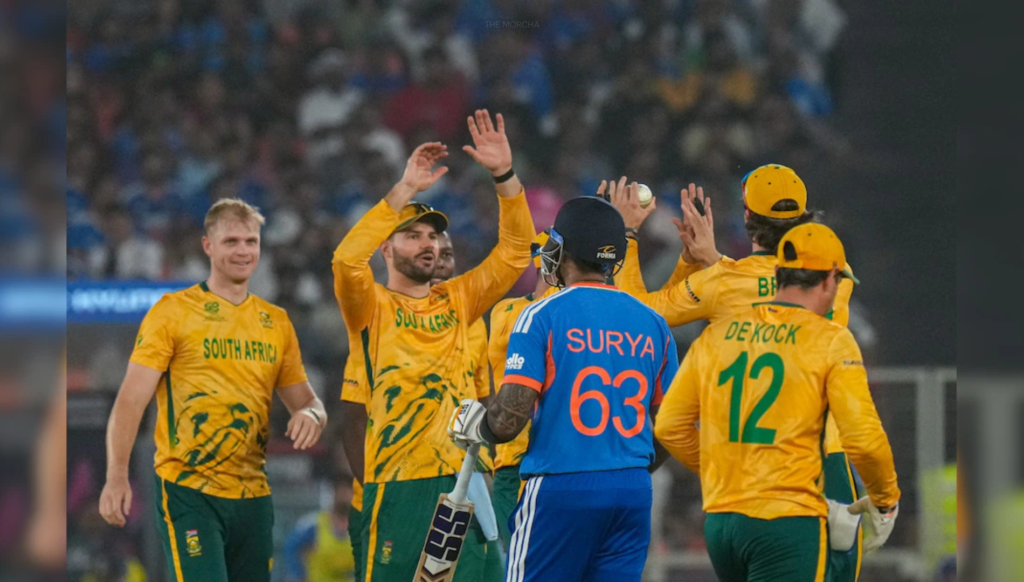
The match also represented a turning point in the tournament, as India, a perennial favorite in T20 cricket, faced a formidable South African lineup brimming with confidence and skill. Analysts and former cricketers speculated endlessly about how India’s batting-heavy strategy would stand against South Africa’s aggressive bowling attack, setting the stage for an unforgettable encounter.
Table of Contents
ICC T20 World Cup 2026
The ICC Men’s T20 World Cup 2026 brought together the world’s top cricketing nations in a compact, action-packed tournament format. After the initial group stages, the Super 8 phase created a critical juncture where only the most consistent teams could progress to the semifinals.
India entered the Super 8s on the back of an unbeaten streak spanning twelve matches, establishing them as a favorite to reach the finals. South Africa, meanwhile, had been quietly dominant, using a blend of youth and experience to overcome early challenges. This context magnified the significance of their head-to-head encounter, as the result would heavily influence points tables, net run rates, and morale for both sides.
Pre-Match Expectations and Predictions
Ahead of the match, cricket pundits painted a picture of contrasting strategies. India’s formidable batting lineup, featuring explosive stroke-makers and technically sound players, was expected to post a mammoth total if conditions were favorable. South Africa, on the other hand, relied on their powerful pace attack and dynamic middle-order batsmen to disrupt India’s rhythm. Social media was flooded with debates about toss outcomes, opening pair effectiveness, and the potential impact of pitch conditions at the Narendra Modi Stadium in Ahmedabad, known for its high-scoring nature. Predictions varied widely, with some experts favoring India’s dominance, while others highlighted South Africa’s ability to execute under pressure.
The Toss and Its Tactical Significance

The toss, often overlooked by casual viewers, played a crucial role in shaping the match dynamics. South Africa won the toss and elected to bat first, aiming to set a challenging target under the lights. This decision demonstrated tactical foresight, as chasing in high-pressure scenarios against India’s batting depth could have tilted the match in India’s favor. By choosing to bat, South Africa signaled confidence in their ability to manage innings pacing, rotate strike effectively, and leverage their power hitters to accelerate in the death overs.
South Africa’s Batting Masterclass
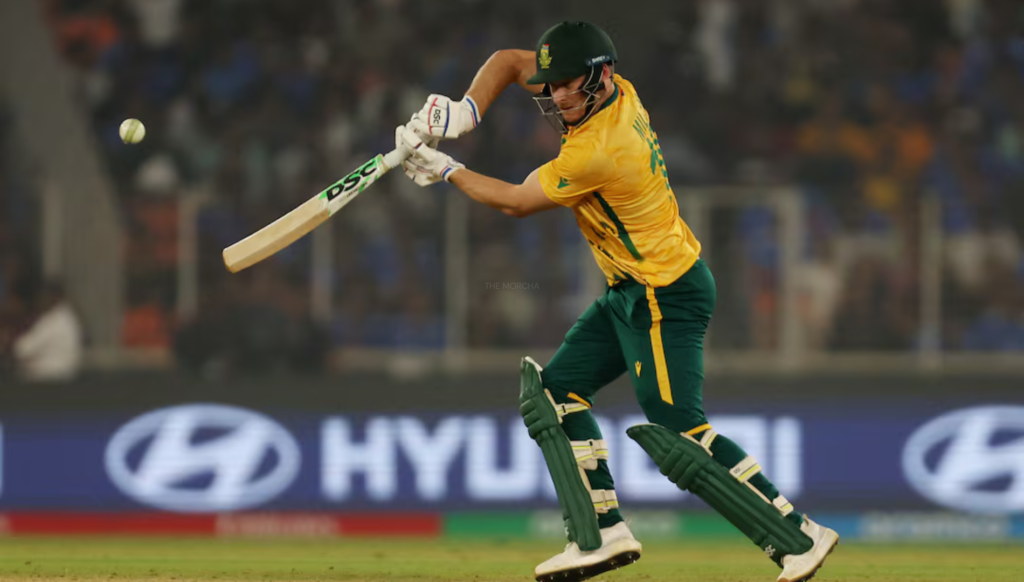
From the first ball, South Africa displayed aggressive intent. David Miller anchored the innings with a sublime 63 off just 35 balls, blending calculated shot selection with explosive boundaries. The young talent Dewald Brevis complemented Miller perfectly, providing momentum during crucial middle overs. South Africa’s approach was clear: capitalize on every loose delivery, maintain a high run rate, and ensure wickets were preserved for the final overs. This strategy culminated in a commanding total of 187/7 in 20 overs, a target that seemed psychologically intimidating for India given their chasing record.
India’s Bowling Response
India’s bowlers, led by Jasprit Bumrah, who took 3 crucial wickets for 15 runs, attempted to contain the onslaught. However, South Africa’s batsmen executed precise shot selection, rotating strike efficiently, and punishing any errors. The Indian bowling lineup struggled to maintain consistent pressure, and the field placements often failed to adapt quickly to South Africa’s dynamic batting strategies. Marco Jansen and Keshav Maharaj’s combined threat with both pace and spin created a formidable challenge for Indian batsmen, forcing them into defensive shots and missed opportunities.
India’s Batting Collapse
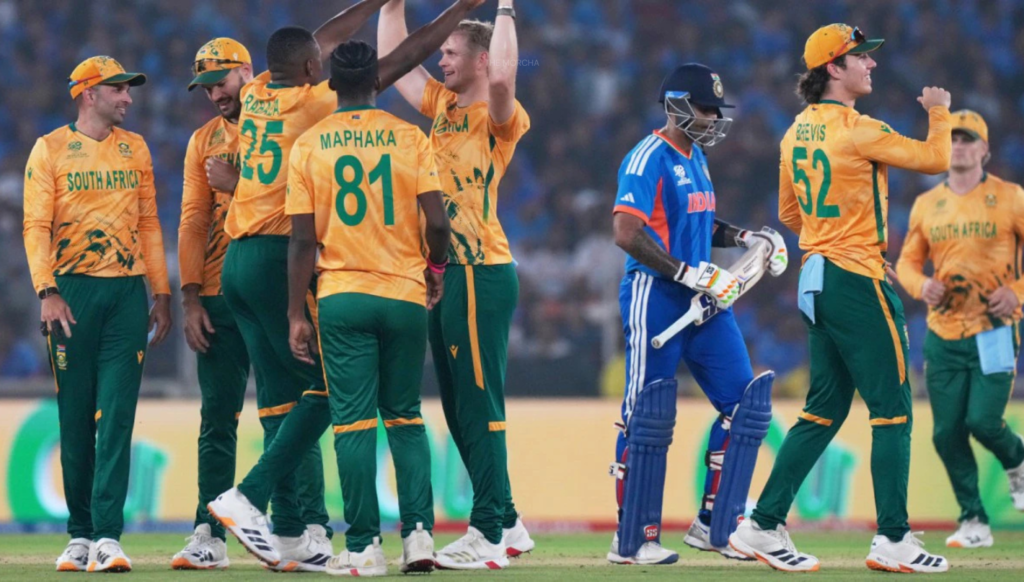
Chasing 188, India faced immediate pressure. Their usually reliable top order faltered against disciplined South African bowling. Shivam Dube’s 42 off 37 balls stood out as a lone beacon of resistance, but the lack of partnerships made India vulnerable. The aggressive fielding and tactical bowling changes by South Africa prevented India from accelerating scoring, resulting in India being all out for 111 in 18.5 overs, falling short by a staggering 76 runs. This collapse marked India’s first defeat in the Super 8 stage and ended their 12-match T20 World Cup unbeaten streak.
Key Turning Points of the Match
Several moments shaped the outcome of this encounter. Early wickets taken by South Africa prevented India from building a stable opening partnership. The middle overs, typically a period for consolidation, instead saw India lose momentum due to precise South African bowling and fielding strategies. The final overs, where India hoped to stage a late comeback, proved ineffective as South Africa’s death-over bowling restricted boundaries and created psychological pressure. Each phase of the match highlighted South Africa’s tactical superiority and India’s inability to adapt quickly.
Player Performance Analysis
South Africa’s victory was a collective effort, yet standout performances defined the game. David Miller’s innings not only anchored the score but also provided a template for pacing under pressure. Dewald Brevis’s fearless strokeplay injected momentum at crucial junctures, while Tristan Stubbs added finishing touches in the final overs. On the bowling side, Marco Jansen’s pace and bounce unsettled Indian batsmen, and Keshav Maharaj’s spin removed key middle-order players. Together, these contributions highlighted South Africa’s balance of experience and youth.
Player Performance Analysis India
For India, the match exposed vulnerabilities. Shivam Dube’s valiant 42 was overshadowed by the collapse of the top order. Jasprit Bumrah’s 3 wickets kept India in contention briefly, but inconsistent support from the other bowlers undermined the team’s overall impact. India’s fielding was competent yet lacked the moments of brilliance needed to shift momentum. The game emphasized the importance of adapting to opposition tactics, as India’s standard strategies were effectively neutralized by South Africa.
Statistical Insights
This match produced significant statistical observations. South Africa’s 76-run victory margin is one of the largest defeats India has faced in T20 World Cups historically. The scorecard reflects South Africa’s dominance across both batting and bowling, as well as India’s inability to convert starts into meaningful partnerships. Key statistics, such as David Miller’s strike rate of 180 and Jansen’s economy rate of 5.5, underscore the tactical execution behind South Africa’s performance. Historical comparisons also reveal that this defeat ends a 12-match unbeaten streak for India in T20 World Cups, highlighting the match’s historical significance.
Social Media and Fan Reactions
Fans and analysts took to social media immediately after the match. Indian fans expressed shock and disappointment, discussing missed opportunities, selection debates, and tactical errors. South African supporters celebrated a historic win with trending hashtags and viral memes. Cricket forums, Instagram reels, and Twitter threads exploded with discussions on how this match might influence future encounters between these two nations. The global attention reinforced cricket’s role as a unifying sport and the emotional investment fans place in T20 World Cups.
Expert Commentary and Analysis
Cricket experts across television networks and online platforms analyzed the result with intense scrutiny. Many praised South Africa for their tactical discipline and execution under pressure, noting how the team maximized every opportunity. Analysts highlighted India’s struggle to adapt mid-game, suggesting strategic changes in batting order, bowling variations, and field placements could have altered the outcome. These insights sparked debates that transcended national boundaries, drawing attention from cricket enthusiasts worldwide.
Tournament Implications
The outcome had immediate implications for the T20 World Cup 2026 standings. South Africa’s win strengthened their position in the Super 8 group, improving their chances of advancing to the semifinals. India, while still a contender, faced increased pressure in upcoming matches to secure points and maintain net run rate advantages. This result emphasized the competitive balance of the tournament and showcased how a single match could dramatically shift the trajectory for both teams.
Tactical Lessons for India
India’s defeat highlighted several tactical lessons. The inability to adapt batting strategies against disciplined bowling exposed rigidity in planning. Field placements were static, allowing South Africa to exploit gaps effectively. India’s middle-order collapse indicated a need for flexible batting approaches and mental resilience under pressure. Future matches would require a combination of tactical innovation, swift decision-making, and psychological preparedness to navigate high-stakes encounters successfully.
Tactical Lessons for South Africa
Conversely, South Africa’s performance reinforced the effectiveness of strategic execution. Aggressive powerplay hitting, disciplined bowling lines, and dynamic field adjustments created pressure at every stage. The balance between experienced players like David Miller and emerging talents such as Dewald Brevis provided both stability and innovation. The match exemplified how preparation, adaptability, and collective team effort can yield dominant performances against formidable opponents.
Cultural and Emotional Impact
Beyond points and statistics, this match resonated deeply with fans in India and South Africa. The unexpected margin of victory stirred emotional reactions, highlighting cricket’s role as a cultural and emotional touchstone. Social gatherings, online fan interactions, and media discussions reflected the profound connection people have with the sport. For South Africans, it was a moment of national pride; for Indians, a reminder of cricket’s unpredictability and the enduring passion it inspires.
A Match to Remember
The South Africa vs India T20 World Cup 2026 clash will be remembered as a game that redefined expectations, delivered drama, and showcased the essence of T20 cricket. South Africa’s tactical brilliance and execution, combined with India’s vulnerabilities under pressure, created a compelling narrative for fans and analysts alike.
This historic match not only altered tournament dynamics but also reaffirmed cricket’s global appeal, emotional resonance, and ability to captivate millions in a single day of sport. It serves as a reminder that in T20 cricket, no lead is guaranteed, no streak is unbreakable, and every match can write history.


