
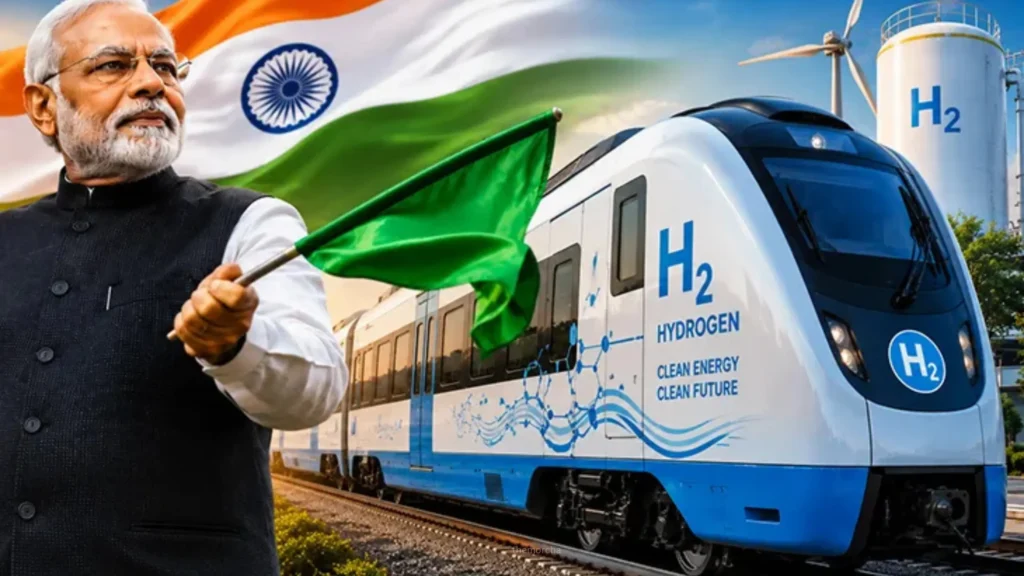
- hydrogen train is a train that uses hydrogen as its main energy source instead of diesel. In this system, hydrogen is stored on the train and used in fuel cells to produce electricity. That electricity powers the train’s motors, allowing it to move without burning fossil fuels in the usual way.
- One of the biggest reasons hydrogen trains are important is that they are much cleaner than traditional diesel trains. During operation, they produce very low direct emissions, and the main output is water vapour. Because of this, they are often described as a greener option for rail travel.
- Hydrogen trains are especially useful on routes where full electrification is difficult, expensive, or still incomplete. Instead of depending on overhead electric wires, they can carry their own power source onboard. This gives railways more flexibility while still reducing pollution.
- They also represent a step toward modern, energy-efficient transport. Countries and railway systems around the world are exploring hydrogen trains as part of broader efforts to cut carbon emissions and improve sustainability. The technology is still developing, but it is seen as a promising alternative in the future of rail transport.
- In simple terms, a hydrogen train works by turning hydrogen into electricity, then using that electricity to run the train. This makes it different from both diesel trains and conventional electric trains. Diesel trains burn fuel directly, while electric trains need external power lines. Hydrogen trains sit between the two, combining onboard power with cleaner operation.
- Another reason they attract attention is the environmental benefit. Since they do not rely on diesel engines for normal operation, they can help reduce air pollution and greenhouse gas emissions. That makes them appealing for countries looking to modernise transport while also supporting climate goals.
Table of Contents
Overall, a hydrogen train is a cleaner, innovative, and practical railway technology. It is not just a new type of train, but part of a larger shift toward sustainable mobility.
How is it operated?
what is the route for the india’s 1st hydrogen train
- India’s first hydrogen train is planned to operate on the Jind–Sonipat route in Haryana, marking a major step toward cleaner and more sustainable rail transportation. The hydrogen train is expected to run on the approximately 89-kilometre Jind–Sonipat section, which has been selected by Northern Railway as the pilot corridor for this landmark project. Once operational, it will showcase India’s commitment to adopting eco-friendly technology in the railway sector while reducing dependence on diesel-powered trains.
- According to reports, the hydrogen train is expected to operate daily and complete the journey in around two hours, connecting important towns and villages across the route. During its journey, the train is expected to stop at several stations, including Jind City, Pandu Pindara, Lalit Khera, Bhambeva, Ishapur Kheri, Butana, Khandrai, Gohana, Rabhra, Lath, Mohana Haryana, Barwasni, and Sonipat. Some reports also describe the pilot corridor as the Jind–Gohana–Sonipat route, highlighting Gohana as a key stop along the way.
- The introduction of India’s first hydrogen train is significant because it is designed to run using hydrogen fuel cells, which generate electricity while emitting only water vapour and heat, making it a far cleaner alternative to conventional diesel locomotives. If the pilot project is successful, the hydrogen train could pave the way for similar services on other non-electrified railway routes across the country, supporting India’s long-term goals of greener, more sustainable public transportation.
So, in simple terms, the route is from Jind to Sonipat in Haryana.
Why was the Jind-Sonipat section chosen as the pilot corridor
- The Jind–Sonipat section was chosen because it is a practical pilot corridor for testing a new hydrogen train in real operating conditions. It already has a dedicated hydrogen storage and refuelling facility at Jind, which makes trials and early operation much easier to manage safely.
- It was also selected because the corridor offers a controlled environment for performance testing. That lets Indian Railways evaluate safety, reliability, and operating behaviour before expanding the technology to more routes. In addition, the section fits into India’s broader plan to use hydrogen on non-electrified or difficult sections of the network, where this kind of train can be especially useful.
- Reports also describe the Jind–Sonipat route as part of Indian Railways’ strategy to build cleaner and more future-ready transport infrastructure. In that sense, the corridor is not just a random test line; it is meant to show whether hydrogen trains can work well in Indian conditions and support future rollout decisions.
In short, the section was chosen because it has the right infrastructure, is suitable for safe trials, and helps Indian Railways test whether hydrogen trains can be scaled up later.
Who will inaugurate the hydrogen train
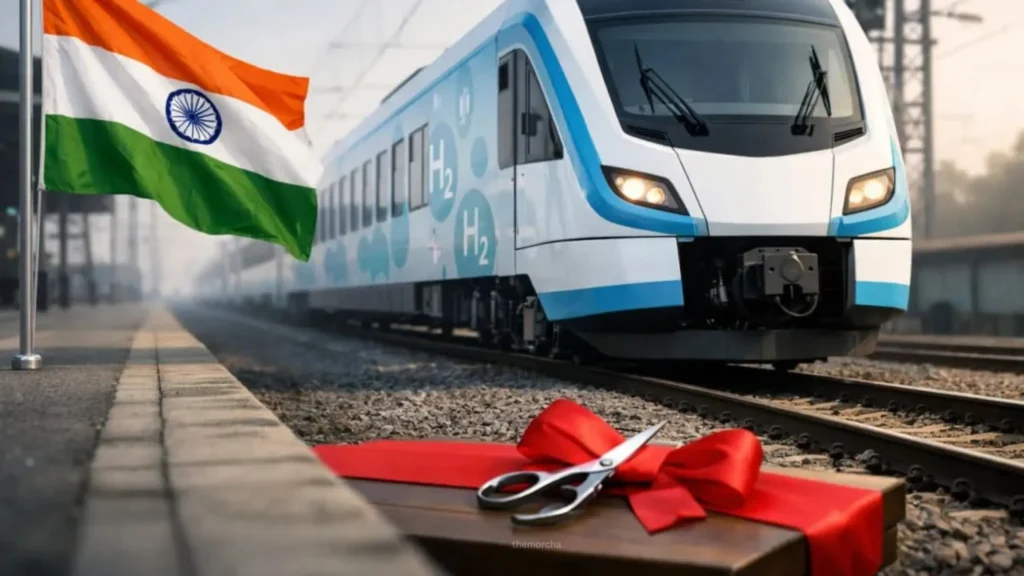
- the person expected to inaugurate India’s first hydrogen train is Prime Minister Narendra Modi. Reports published around July 2026 say he is scheduled to flag off the train on July 17, 2026, from Jind in Haryana. This inauguration is being treated as a major milestone for Indian Railways because it marks the launch of India’s first hydrogen-powered passenger service.
- The train has attracted attention because it represents a shift toward cleaner rail transport. Instead of running on diesel, it uses hydrogen fuel cells to generate electricity onboard. That means the train is designed to operate with very low direct emissions, with water vapour being the main exhaust. Because of this, the inauguration is being seen not just as a ceremonial event, but also as the introduction of a new technology for Indian railways.
- The launch is also significant because it comes after a long period of trials and testing. Before any inauguration, a train of this kind must go through safety checks, speed trials, and operational testing. That helps ensure the system is stable, safe, and ready for service. The fact that the train is reportedly ready for flag-off suggests that the project has moved from planning and testing into the final stage of rollout.
- Another reason the inauguration matters is that it may influence future railway decisions. If the hydrogen train performs well, it could encourage Indian Railways to consider similar trains on other routes, especially places where electrification is difficult or where a greener transport option is needed. In that sense, the inauguration is a starting point for a much bigger experiment in sustainable mobility.
So, in simple terms, the hydrogen train is expected to be inaugurated by Prime Minister Narendra Modi, and the event is important because it introduces India’s first hydrogen-powered train service and signals a new direction for cleaner rail travel.
How is it different from the other train
- A hydrogen train differs from other trains mainly in how it gets power. A diesel train burns fuel in an engine, while a hydrogen train uses hydrogen fuel cells to make electricity onboard, so it does not rely on diesel combustion during normal operation.
- Compared with a conventional electric train, the difference is that an electric train usually draws power from overhead wires or a third rail. A hydrogen train carries its own fuel and power system, so it can run on routes without full electrification. That gives it more flexibility, especially on non-electrified lines.
- The environmental difference is also important. Diesel trains produce exhaust gases and local air pollution, while hydrogen trains produce much less direct pollution during use, with water vapour being the main by-product. Electric trains can also be very clean, but their overall impact depends on how the electricity is generated.
- There is also a difference in infrastructure. Diesel trains need fuel supply, electric trains need wires and substations, and hydrogen trains need hydrogen storage and refuelling facilities. That means each type of train fits different kinds of routes and railway systems.
In simple terms, a hydrogen train is different because it combines onboard fuel storage with electric traction. It tries to offer some of the cleaner operation of an electric train while avoiding the need for overhead wires on every route.
So the main difference is:
- Diesel train: burns fuel directly.
- Electric train: uses electricity from outside the train.
- Hydrogen train: makes electricity onboard from hydrogen fuel cells.
That makes hydrogen trains a cleaner alternative to diesel and a more flexible option for some routes, though they still depend on hydrogen supply infrastructure.
What is the difference in their maintenance
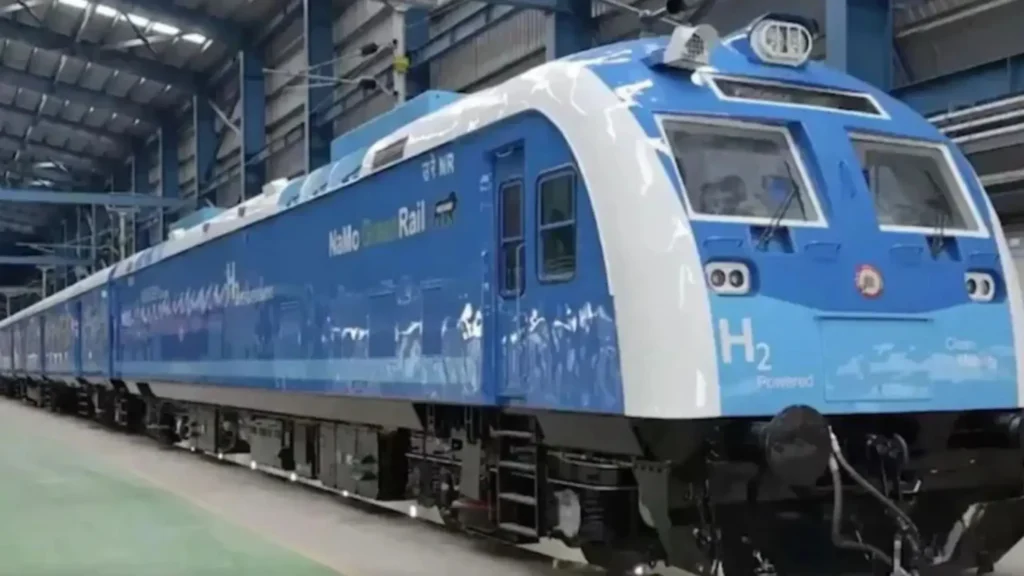
- Maintenance is one of the biggest differences between hydrogen trains and other trains. A hydrogen train usually needs more specialised maintenance than a diesel train because it has fuel cells, hydrogen tanks, batteries, and extra safety systems that all have to be checked regularly.
- Compared with a diesel train, a hydrogen train has fewer moving parts in the propulsion system, but it has more complex energy equipment. Diesel engines need regular mechanical servicing, oil-related checks, and exhaust-system upkeep, while hydrogen trains shift much of the maintenance burden to fuel cells, battery systems, hydrogen storage, valves, sensors, and leak-detection equipment. That means the day-to-day work is different rather than simply easier.
- Compared with an electric train, hydrogen trains usually need more maintenance too. Electric trains rely mainly on external power equipment and onboard motors, while hydrogen trains must maintain both the traction system and the onboard hydrogen system. That includes refuelling infrastructure, pressure systems, and safety monitoring, which adds complexity. Battery-electric trains generally have simpler onboard energy systems than hydrogen trains, so their maintenance is often lower.
- A key issue is the fuel cell. Some industry reporting says fuel cells may need replacement relatively often compared with simpler train components, which increases maintenance effort and cost. Research also suggests that the overall maintenance load can be significant because fuel cells and batteries are among the major components that drive lifecycle costs.
So the maintenance difference can be summarised like this:
- Diesel trains: more mechanical engine maintenance, but mature and familiar servicing.
- Electric trains: usually simpler onboard maintenance, but they depend on external electrical infrastructure.
- Hydrogen trains: cleaner operation, but more complex onboard maintenance because of fuel cells, tanks, batteries, and safety systems.
In short, hydrogen trains are environmentally attractive, but their maintenance is more technically demanding than a diesel train and often more complex than an electric or battery-electric train.
Give information about Jind and India’s first hydrogen train
- Jind plays a central role in India’s first hydrogen train project because it is the place where the train’s fuel infrastructure, trial activity, and launch preparations have been concentrated. In other words, Jind is not just one station on the map; it is the operational base of the country’s first hydrogen-powered rail service. The choice of Jind gives the project a practical starting point and makes it easier to manage the new technology safely and efficiently.
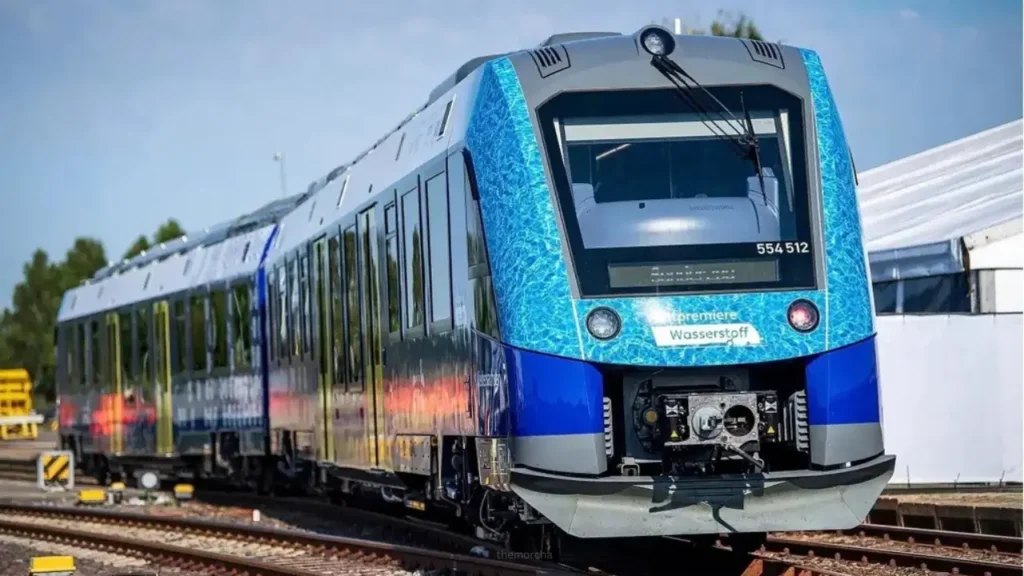
- The hydrogen train itself is a major development for Indian Railways. It is a fuel-cell train, which means it does not rely on diesel combustion in the usual way. Instead, it carries hydrogen onboard and converts it into electricity through fuel cells. That electricity powers the train’s motors. The main by-product is water vapour, which is why the train is being described as a cleaner and greener alternative to conventional diesel trains. This makes the project important not only for transportation but also for environmental policy.
- Jind became significant because hydrogen rail operations require a special support system. A hydrogen train cannot simply be fueled in the same way as a diesel train. It needs storage, refuelling, monitoring, and safety systems designed for hydrogen handling. Reports indicate that Jind has been developed with dedicated hydrogen arrangements, making it suitable for this pilot project. This includes the ability to store fuel and support the train’s early operations. Having the fuel base at Jind reduces logistical difficulty and allows the train to be tested in a controlled manner.
- The train is expected to operate on the Jind–Sonipat section in Haryana. That route was chosen as the first pilot corridor so Indian Railways could evaluate the train’s performance under real operating conditions. Trials in this region have already taken place, showing that the project has moved beyond the concept stage and into practical testing. For a new technology like hydrogen rail, such trials are essential. They help engineers study speed, braking, safety, stability, fuel consumption, and the way the train behaves on the track.
- The importance of Jind also lies in symbolism. It is now associated with a historic first for India’s rail network. Whenever a new transport technology is introduced, the first location to host it often becomes part of the story. In this case, Jind is likely to be remembered as the place where India’s hydrogen rail journey began. That gives the town a special place in the country’s shift toward cleaner mobility.
- The broader meaning of the project is equally important. India has been looking for ways to reduce pollution, lower carbon emissions, and modernise rail travel. Hydrogen trains may help in areas where electrification is difficult or where a zero- or low-emission option is desired without depending fully on overhead wires. If the Jind project works well, it could encourage similar trains on other routes in the future. That is why the project is being watched closely by railway planners, environmental observers, and the public.
- The train’s launch also connects with India’s larger clean-energy goals. Hydrogen is often discussed as part of the future of transport because it can support lower-emission mobility when produced from clean energy sources. The Jind project therefore serves as a test of whether hydrogen can be used effectively in Indian rail conditions. If the project succeeds, it may help establish a model for how hydrogen trains can be introduced elsewhere.
In simple terms, Jind matters because it is the fuel centre, testing base, and launch point for India’s first hydrogen train. The train matters because it represents a new stage in railway technology and a cleaner alternative to diesel-powered transport. Together, Jind and the hydrogen train mark an important step in India’s move toward sustainable rail travel.
In conclusion, Jind is the starting point of India’s first hydrogen train project and a key part of the country’s move toward cleaner rail transport. It is where the hydrogen fuel system has been set up, where trials have been carried out, and where the train is expected to begin its early operations. Because of this, Jind is not just a place on the route; it is the base that supports the whole project.
- India’s first hydrogen train is important because it shows how rail travel can become more environmentally friendly. Instead of using diesel, it produces electricity onboard from hydrogen fuel cells, and the main by-product is water vapour. This makes it a cleaner option compared with traditional trains that release smoke and other pollutants. It also shows that Indian Railways is seriously exploring new technology for the future.
- The project is significant for Haryana as well, since the state is hosting this first-of-its-kind development. If the train performs well, it could encourage similar hydrogen-powered services on other routes in India. That would be especially useful on lines where electrification is difficult or expensive. So, the project is not only about one train, but about testing a possible direction for the future of Indian railways.
- Overall, Jind and India’s first hydrogen train together represent a milestone in transport innovation. They reflect a move toward cleaner energy, modern technology, and more sustainable travel. This is why the project is being seen as an important step for both Indian Railways and India’s broader clean-energy goals.