
US Tariff Threat has created a new challenge for India’s oil refining industry, with refiners closely monitoring the future of Russian crude purchases and the possible impact on India’s wider trade relationship with the United States.
India has become one of the world’s largest buyers of Russian crude since 2022, benefiting from relatively competitive Russian oil prices and established refinery compatibility. Government data shows that Russia accounted for about 35.8% of India’s crude-oil import volume in FY 2024-25, making it the country’s largest source of imported crude. Iraq, Saudi Arabia, the UAE and the United States were among the other major suppliers.
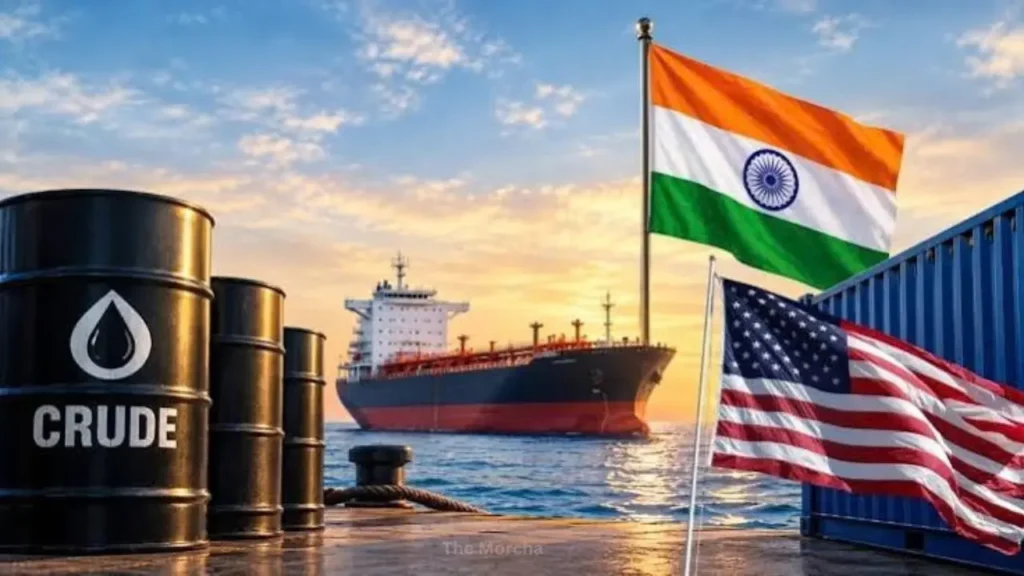
Now, the US Tariff Threat is encouraging Indian refiners to examine alternative sources more closely. The issue is not simply about replacing Russian barrels. Refiners must consider crude quality, refinery configuration, shipping costs, supply reliability, payment arrangements and the effect of higher input costs on refining margins.
Recent U.S. legislation has added to this uncertainty. The Lindsey O. Graham Sanction Russia and Iran Act of 2026 Gives U.S.President authority to impose tariffs of up to 100% on countries that continue to purchase Russian oil and gas. The legislation does not mean that a 100% tariff is automatically imposed on India; the administration has discretion over whether and how such measures are applied.
Table of Contents
Why the US Tariff Threat Matters for India
The US Tariff Threat matters because India’s relationship with the United States extends far beyond crude oil. The U.S. is a major destination for Indian exports, including pharmaceuticals, engineering products, textiles, information-technology services and other goods and services.
If additional tariffs were imposed on Indian exports because of continued Russian energy purchases, Indian companies could face higher costs and weaker competitiveness in the U.S. market. At the same time, rapidly reducing Russian crude purchases could increase the cost of feedstock for Indian refineries. This creates a difficult supply-chain calculation.
Indian refiners have to compare the economic advantage of Russian crude with the potential cost of trade restrictions. The calculation also changes with global oil prices, freight rates, exchange rates and the availability of alternative crude grades.
The US Tariff Threat therefore has implications for both India’s energy strategy and its broader international trade policy.
What the New U.S. Legislation Changes
The recently enacted U.S. legislation gives Washington a new mechanism to pressure countries that continue purchasing Russian and Iranian energy.
The legislation was passed by the U.S. House after previously receiving Senate approval and was signed into law on September 18, 2026, according to recent reporting. It authorizes potentially severe tariffs on goods from countries identified under the legislation, with the maximum level reaching 100%.
For India, an important distinction is that the tariff authority is not the same as an automatic 100% tariff on all Indian exports. The law establishes a framework under which the U.S. administration can determine whether and how the measures are applied. This means the US Tariff Threat currently represents a potential trade-policy measure rather than an automatic blanket tariff.
That distinction is important when assessing the US Tariff Threat. Indian businesses are dealing with a potential policy risk rather than a confirmed blanket tariff on all exports. The US Tariff Threat could still influence business decisions, supply chains, and trade planning if additional measures are introduced.
India’s Commerce and Industry Minister Piyush Goyal has said the government is examining the implications of the new U.S. law. New Delhi has also emphasized that its crude purchasing decisions are connected to national energy-security requirements.
Why Russian Crude Became Important to Indian Refiners
Russian crude became increasingly important to India after the global energy market changed following Russia’s invasion of Ukraine in 2022. As European buyers reduced purchases of Russian crude, Indian refiners increased imports of Russian barrels that were available at competitive prices. India’s Russian crude imports subsequently grew sharply.
Government data indicates that Russia’s share of India’s crude imports rose from 21.6% in FY 2022-23 to 35.9% in FY 2023-24 and 35.8% in FY 2024-25. Russian crude imports reached approximately 87.54 million tonnes in FY 2024-25, according to the Department of Commerce analysis.
The economics were important. Russian Urals crude was available at prices that made it attractive to refiners, while several Indian refineries were technically capable of processing the grade.
This meant that Russian crude was not simply another source of supply. It became a significant component of India’s overall refinery feedstock mix. The US Tariff Threat now raises the possibility that this cost advantage could come with additional trade-related risks.
Indian Refiners Face a Cost and Supply Balancing Act
For Indian refiners, replacing Russian crude is not as simple as choosing another country on a supplier list. Different crude grades have different characteristics, including sulphur content, density and yield patterns. Refineries are designed and optimized around particular crude combinations. Changing the feedstock can therefore affect refinery economics and product output.

There is also the issue of freight.
A cargo may appear competitively priced at the source but become more expensive after shipping, insurance, financing and other logistics costs are included. Recent Indian trade data illustrates this difference. A government-linked analysis reported that Russian crude imports were priced around $500 per tonne in September 2025, while crude from the UAE, Saudi Arabia and the United States was more expensive during that period.
Therefore, the US Tariff Threat could create a situation in which Indian refiners have to pay more for replacement barrels while simultaneously managing uncertainty over export-market access.
Iraq Could Become an Important Alternative
Iraq remains one of India’s largest crude suppliers and is an obvious market for refiners looking to diversify their feedstock. Government data shows Iraq was India’s second-largest crude supplier in FY 2024-25, with a share of around 18% of imported crude by value according to recent trade analysis.
Iraqi crude is already familiar to Indian refiners, making it easier to incorporate into existing procurement strategies than an entirely new crude source. For this reason, Iraq could play a significant role if Indian refiners increase purchases from non-Russian suppliers.
However, Iraq cannot necessarilyreplace every Russianbarrel on a one-for-one basis. Refiners have to consider crude characteristics, available volumes, contractual commitments and prevailing market prices. The US Tariff Threat therefore increases the importance of procurement flexibility rather than creating a single replacement supplier.
Saudi Arabia and the UAE Remain Key Suppliers
Saudi Arabia and the United Arab Emirates are also central to India’s crude-import strategy. Both countries have long-standing commercial relationships with Indian refiners and are established suppliers to the Indian market.
According to government trade data, Saudi Arabia and the UAE remained among India’s largest crude suppliers during FY 2024-25. Their established infrastructure and proximity to India make them important components of any diversification strategy. At the same time, greater dependence on Gulf suppliers introduces another consideration: shipping routes.
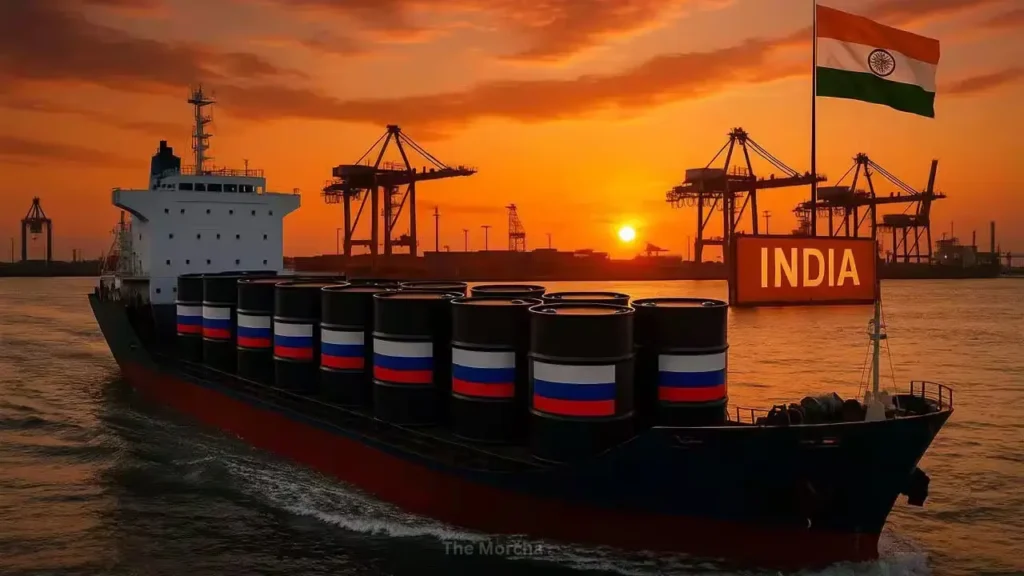
A large share of Gulf-origin crude travels through strategically important maritime routes, including the Strait of Hormuz. Disruptions in those routes can affect freight costs, delivery schedules and overall supply security. Consequently, the US Tariff Threat is pushing attention toward diversification, but diversification itself has logistical and geopolitical constraints.
West Africa and Latin America Offer Additional Options
Indian refiners can also look toward producers in West Africa and Latin America. Countries such as Nigeria and Brazil have become part of India’s broader crude-sourcing network. Government trade data shows that both countries supplied crude to India, although their shares remain smaller than those of Russia, Iraq, Saudi Arabia and the UAE.
Increasing purchases from these regions could give Indian refiners another layer of supply diversification. However, longer shipping distances can increase transportation costs and delivery times. The economics of a West African or Latin American cargo therefore depend heavily on freight rates and the price difference between crude grades.
This is why the US Tariff Threat should not be viewed simply as a question of finding a new country from which to buy oil. It is a much broader supply-chain challenge involving price, quality, logistics and refinery compatibility.
What Happens to Indian Fuel Prices?
One of the biggest questions is whether changes in crude sourcing could eventually influence domestic fuel prices. Crude oil is a major input cost for refiners, but retail fuel prices are influenced by several factors. These include international crude prices, refining margins, currency movements, taxes, marketing costs and other commercial considerations. If alternative crude is consistently more expensive than Russian supplies, refiners could face higher input costs.
However, the actual effect on consumers would depend on market conditions and how those higher costs are absorbed throughout the refining and fuel-distribution system. The US Tariff Threat therefore does not automatically mean that petrol or diesel prices will rise by a specific amount. The final effect would depend on several variables that can change rapidly.
India Is Emphasizing Energy Security
India’s official position has emphasized the importance of maintaining energy security while monitoring international developments. New Delhi has repeatedly argued that crude purchasing decisions are guided by national energy requirements and market conditions. India is also continuing to diversify its sources of crude rather than depending entirely on a single supplier.
This approach is significant because India imports the vast majority of the crude oil it consumes. Maintaining multiple supply channels can reduce exposure to disruptions affecting any individual producer or route. The US Tariff Threat has therefore brought the concept of supply diversification into sharper focus.
Rather than completely abandoning one supplier overnight, refiners can adjust their purchasing mix depending on prices, availability, contractual arrangements and geopolitical conditions.
Cheap Oil vs. Export Access
At the heart of the current situation is a larger economic trade-off. Russian crude has provided Indian refiners with an important source of competitively priced feedstock. At the same time, the United States is one of India’s most important export markets. This creates a situation where decisions in the energy sector can affect businesses in completely different sectors.
For example, an oil-refining decision could potentially have implications for exporters of pharmaceuticals, textiles, engineering products and other goods if broader U.S. trade measures are introduced.
The US Tariff Threat therefore extends beyond oil companies. It is part of a wider debate over how India can protect affordable energy supplies while maintaining access to major international markets.
What Indian Refiners Could Do Next
Indian refiners have several potential strategies available. First, they can increase purchases from established suppliers such as Iraq, Saudi Arabia and the UAE. Second, they can expand spot purchases from countries such as Nigeria, Brazil and other producers when market economics are favorable.
Third, refiners can maintain a diversified crude basket instead of becoming heavily dependent on any one source. Fourth, companies can monitor international sanctions and trade rules closely so that purchasing decisions remain compliant with applicable regulations. The US Tariff Threat makes procurement flexibility increasingly important because the regulatory environment can change faster than long-term crude contracts.
A New Phase for India’s Oil Supply Strategy
The US Tariff Threat has introduced a new layer of uncertainty into India’s crude-oil procurement strategy. Russia remains an important supplier, but Indian refiners now have stronger reasons to evaluate alternative cargoes from Iraq, Saudi Arabia, the UAE, the United States, West Africa and Latin America. Government data already shows that these countries form an important part of India’s diversified crude-import base.
The immediate challenge is balancing three objectives: keeping crude supplies reliable, controlling refinery input costs and protecting India’s broader international trade interests.
The US Tariff Threat does not mean that Indian refiners will immediately stop buying Russian crude, nor does the new U.S. law automatically impose a 100% tariff on Indian exports. Instead, it creates a policy risk that companies and the Indian government must evaluate alongside energy-market conditions.
For Indian refiners, the coming period is likely to involve closer monitoring of Russian crude availability, alternative cargo prices, freight markets and U.S.-India trade negotiations.

Ultimately, the US Tariff Threat has made crude-supply diversification more strategically important. India’s refining sector already has access to a broad international supplier network, but replacing a large share of Russian crude without significantly increasing costs will require careful procurement decisions.
As global energy markets remain sensitive to geopolitical developments, Indian refiners will have to balance price, supply security and regulatory risk. The US Tariff Threat is therefore not only an oil-market story; it is also a wider story about India’s energy security, international trade and the changing structure of global crude-oil flows.