
Krishna Janmashtami 2026: Break the Darkness of Evil with the Powerful Message of Love, Faith & Divine Hope
Diksha10 min read
Krishna Janmashtami is one of the most beautiful and spiritually significant Hindu festivals celebrated with immense devotion across India and many parts of the world. The festival marks the divine birth of Lord Krishna, who is worshipped as an incarnation of Lord Vishnu. His birth is associated with the victory of good over evil, truth over injustice, and hope over darkness. Every year, devotees celebrate this sacred occasion through fasting, prayers, bhajans, devotional songs, temple visits, and midnight celebrations.
Krishna’s life continues to inspire millions because his teachings are not limited to one particular time or situation. His message of love, courage, duty, compassion, wisdom, and righteousness remains meaningful even in today’s challenging world. Krishna Janmashtami therefore represents much more than the celebration of a divine birth. It reminds people that whenever negativity and injustice become powerful, goodness and truth can ultimately overcome them.
Table of Contents
What Is Krishna Janmashtami?
Krishna Janmashtami is the annual celebration of the birth of Lord Krishna. According to Hindu tradition, Krishna was born on the eighth day, known as Ashtami, of the dark fortnight of the month of Bhadrapada. His birth took place at midnight in Mathura.
Devotees believe that Lord Krishna appeared on Earth to restore dharma and protect innocent people from injustice. His birth is especially connected with the tyrannical ruler Kansa, who feared that Krishna would become the reason for his downfall.
The festival brings together spirituality, devotion, culture, music, dance, and community celebrations. Homes and temples are decorated beautifully, while devotees prepare special offerings for Krishna.
The Powerful Story Behind Krishna’s Birth
The story of Krishna’s birth is one of the most inspiring stories in Hindu tradition. Krishna was born to Devaki and Vasudeva in Mathura. At that time, Devaki’s brother Kansa had become a cruel ruler.
According to the traditional story, a divine prophecy warned Kansa that the eighth child of Devaki would become the cause of his destruction. Terrified by the prophecy, Kansa imprisoned Devaki and Vasudeva.
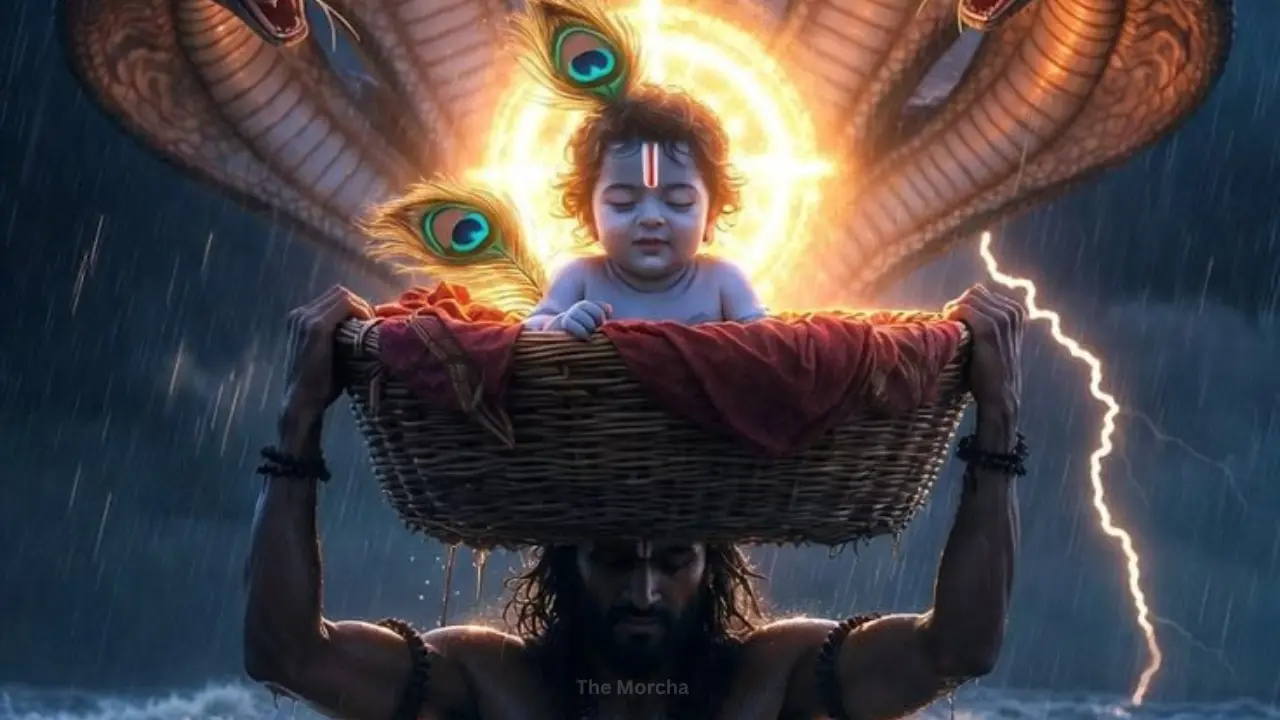
Despite the dangerous circumstances, Krishna was born at midnight. Vasudeva carried the newborn Krishna across the Yamuna River to Gokul, where he was raised by Nanda and Yashoda. This story symbolizes the powerful idea that even during the darkest circumstances, hope can appear unexpectedly.
Why Is Krishna’s Birth Celebrated at Midnight?
One of the most distinctive traditions of Krishna Janmashtami is the midnight celebration. Devotees believe that Lord Krishna was born around midnight. Temples often organize special prayers and devotional ceremonies at this time. The idol of baby Krishna is placed in a beautifully decorated cradle, and devotees sing bhajans and chant Krishna’s name.
The midnight celebration creates an atmosphere filled with devotion and excitement. After prayers, devotees often break their fast and distribute sweets and prasad.
The Spiritual Meaning of Janmashtami
The spiritual meaning of Krishna Janmashtami goes much deeper than simply remembering Krishna’s birth. Krishna’s arrival represents the appearance of light during a period of darkness. His story teaches that evil and injustice may appear powerful, but they cannot continue forever.
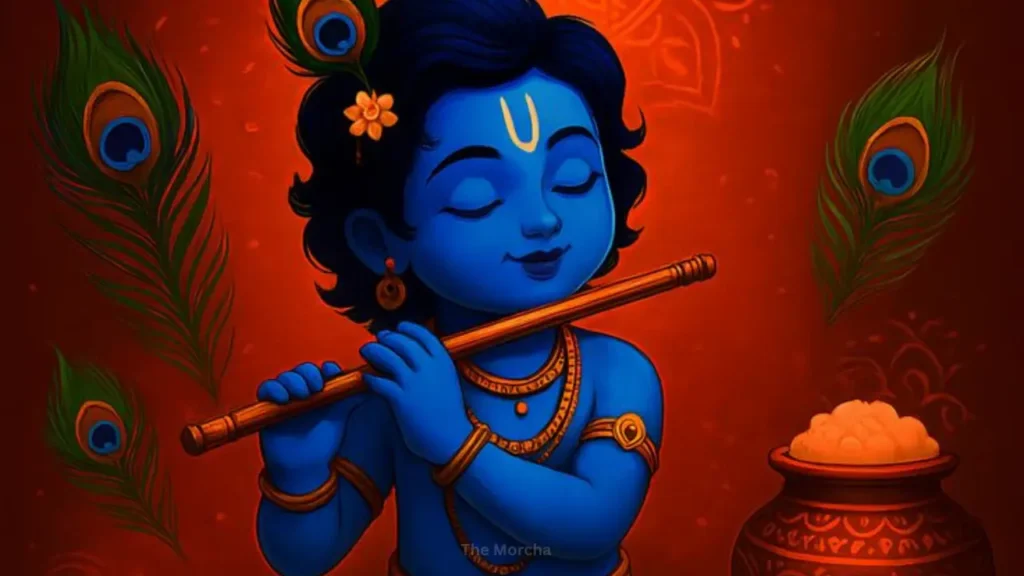
The festival encourages people to remove negativity from their hearts and replace it with faith, compassion, honesty, and courage. It is also a reminder that difficult situations should not destroy our hope. For many devotees, Janmashtami becomes an opportunity for self-reflection and spiritual renewal.
Krishna’s Childhood and His Divine Playfulness
Krishna’s childhood stories are among the most loved parts of Hindu tradition. Stories of Krishna with Yashoda, his friends, and the people of Gokul are celebrated for their innocence and charm.
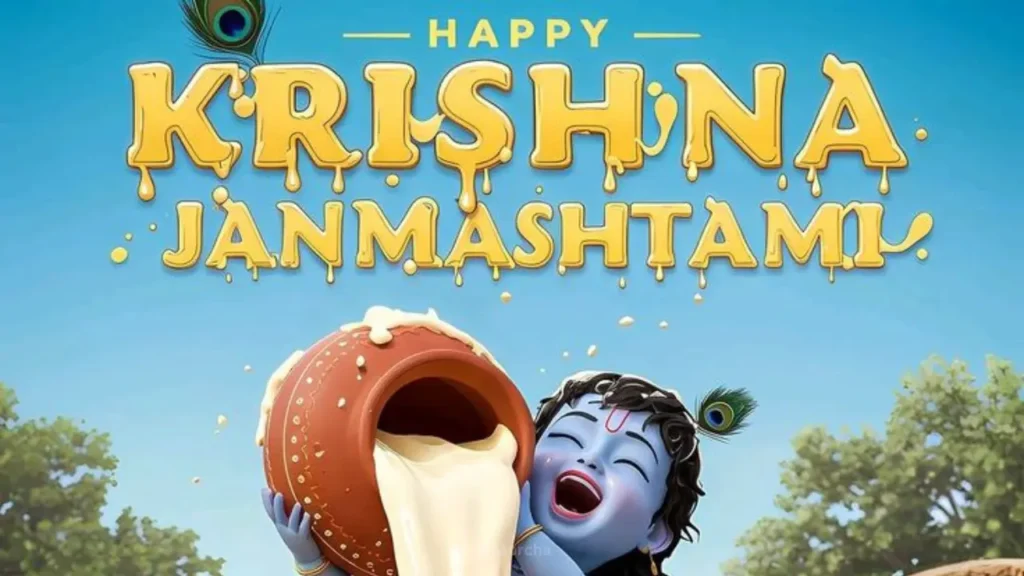
He is famously associated with butter, which is why he is affectionately called Makhan Chor in devotional traditions. His playful nature made him extremely popular among children and devotees.
These stories show a different side of Krishna. Along with being a divine figure, he is remembered as a loving child whose presence brought happiness to the people around him.
The Famous Dahi Handi Tradition
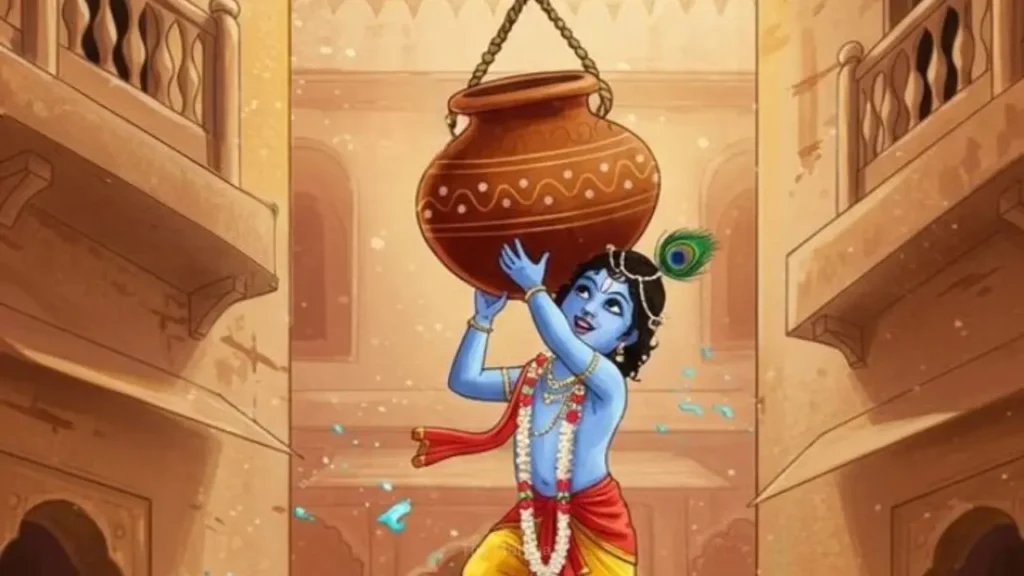
Dahi Handi is one of the most energetic celebrations associated with Krishna Janmashtami, particularly in Maharashtra and several other parts of India. In this tradition, a clay pot filled with curd, butter, or other treats is suspended high above the ground. Groups of participants form human pyramids to reach and break the pot.
The tradition is inspired by stories of young Krishna and his friends stealing butter. Today, Dahi Handi represents teamwork, determination, coordination, and community spirit. It has also become a major cultural event featuring music, dancing, and large public gatherings.
Fasting During Janmashtami
Fasting is an important spiritual practice for many devotees during Krishna Janmashtami. Some people observe a complete fast, while others follow different forms of fasting according to their traditions and personal circumstances.
The purpose of fasting is not simply to avoid food. Devotees often see it as a way to control the senses, focus the mind, and dedicate themselves to prayer. People who fast may consume fruits, milk, water, and specially prepared fasting foods. The fast is commonly broken after the midnight worship of Lord Krishna.
Beautiful Decorations for Janmashtami
Homes and temples are beautifully decorated during Krishna Janmashtami. Devotees create small scenes representing Krishna’s childhood, Gokul, Vrindavan, or the prison where Krishna was born.
A small cradle containing an idol of baby Krishna is often placed in the center of the decoration. Flowers, lights, peacock feathers, colorful fabrics, and traditional ornaments are commonly used. Children especially enjoy participating in these activities because they allow them to learn about Krishna’s stories in a creative and enjoyable way.
Devotional Songs and Bhajans
Music plays an important role in Krishna Janmashtami celebrations. Temples and homes often echo with Krishna bhajans, devotional songs, and chants. Popular chants such as “Hare Krishna” and “Radhe Krishna” create a peaceful spiritual atmosphere. Devotees may also organize bhajan evenings and kirtans.
Music allows people to express their devotion emotionally. Even those who cannot participate in elaborate rituals can celebrate the festival by listening to devotional music and remembering Krishna.
Krishna’s Message of Dharma
One of Krishna’s most important teachings is the importance of dharma, or righteous duty. His teachings in the Bhagavad Gita continue to influence people around the world. Krishna teaches that people should perform their responsibilities sincerely without becoming excessively attached to the results.
This message remains highly relevant today. Whether someone is a student, professional, parent, business owner, or social worker, performing one’s responsibilities honestly can create a meaningful life.
The Bhagavad Gita and Krishna’s Wisdom
The Bhagavad Gita is one of the most influential spiritual texts associated with Lord Krishna. It presents a dialogue between Krishna and Arjuna on the battlefield of Kurukshetra. Arjuna becomes confused and emotionally overwhelmed before the battle. Krishna guides him through teachings about duty, action, knowledge, devotion, and self-realization.
The teachings encourage people to overcome fear, confusion, and attachment and to focus on righteous action. Therefore, Krishna Janmashtami can also be viewed as an opportunity to revisit the timeless wisdom of the Bhagavad Gita.
The Message of Good vs. Evil
One of the strongest themes of Krishna Janmashtami is the victory of good over evil. Krishna’s birth takes place in a difficult period filled with fear and oppression. Yet his arrival brings hope and eventually contributes to the downfall of injustice.
The message remains powerful in modern life. People face stress, dishonesty, hatred, jealousy, violence, and negativity in different forms. Krishna’s story reminds us not to surrender to darkness. Instead, we should choose truth, courage, kindness, and righteousness.
How Janmashtami Is Celebrated Across India
Different regions of India celebrate Krishna Janmashtami in their own unique ways. In Mathura and Vrindavan, celebrations are particularly grand because of their association with Krishna’s life. Temples are decorated, devotional programs are organized, and thousands of devotees participate in prayers.
Maharashtra is famous for Dahi Handi celebrations. Gujarat and several western regions organize vibrant devotional programs and cultural events. In many parts of North India, devotees visit temples at midnight and participate in special Krishna worship. Despite regional differences, the central emotion remains devotion toward Lord Krishna.
Janmashtami Celebrations for Children
Krishna Janmashtami is also a wonderful festival for children. Schools and families often organize Krishna-themed activities. Children may dress as Krishna and Radha, participate in fancy-dress competitions, decorate matkis, perform dances, or act out stories from Krishna’s childhood. These activities make the festival enjoyable while helping younger generations understand Indian cultural and spiritual traditions.
Food is another important part of the Krishna Janmashtami celebration. Devotees prepare various delicious dishes as offerings to Lord Krishna and share them as prasad with family and friends. During Krishna Janmashtami, common preparations may include makhan, mishri, fruits, milk-based sweets, peda, panjiri, and fasting-friendly dishes. These traditional foods add sweetness and devotion to the Krishna Janmashtami celebrations and make the festival even more special.
Many families prepare homemade prasad and share it with relatives, friends, and neighbors. The tradition of offering food represents gratitude and devotion. Sharing prasad also strengthens feelings of community and togetherness.
Why Krishna’s Teachings Matter Today
The modern world is filled with competition, stress, uncertainty, and constant distractions. Krishna’s teachings provide valuable guidance for dealing with these challenges.
His message encourages people to remain calm during difficult situations, perform their duties honestly, avoid excessive attachment to outcomes, and maintain faith in righteousness.
Young people can especially learn from Krishna’s teachings about confidence, decision-making, responsibility, friendship, and emotional strength. Thus, Krishna Janmashtami is not only a festival connected with history and tradition. It can also inspire positive changes in everyday life.
The Importance of Love and Compassion
Krishna is strongly associated with love and devotion. Stories involving Radha and Krishna have become powerful symbols of spiritual love in Indian culture. The deeper meaning of this love goes beyond ordinary attachment. It represents devotion, surrender, trust, and a spiritual connection with the divine.
The festival encourages people to spread love and compassion rather than hatred and negativity. In a world where people can easily become divided by differences, Krishna’s message reminds us of the importance of understanding and kindness.
How to Celebrate Janmashtami in a Meaningful Way
People can celebrate Krishna Janmashtami without making the occasion unnecessarily complicated. They can begin the day with prayer and meditation, decorate a small Krishna idol, listen to devotional music, read the Bhagavad Gita, and participate in temple celebrations.
Families can also use the occasion to teach children about Krishna’s life and values. Helping someone in need, donating food, supporting a charitable activity, or simply spreading kindness can also make the celebration more meaningful. The true spirit of the festival lies in devotion and positive action.
Powerful Lessons We Can Learn from Krishna
There are many lessons that people can take from Krishna’s life and teachings.
- Courage: Do not allow fear to control important decisions.
- Duty: Perform your responsibilities sincerely.
- Wisdom: Think carefully before making difficult choices.
- Compassion: Treat others with kindness.
- Faith: Do not lose hope during challenging times.
- Self-control: Learn to manage emotions and desires.
- Positivity: Focus on solutions instead of constantly thinking about problems.
These lessons make the celebration of Krishna Janmashtami meaningful even for people who want to apply its values to everyday life.
A Festival of Hope and Transformation
At its deepest level, Krishna Janmashtami is a festival of hope. Krishna’s birth occurs during a time of fear and oppression, yet his arrival symbolizes the beginning of a new possibility.
This powerful message can inspire people facing their own difficulties. Darkness may seem overwhelming, but it does not have to define the future. Janmashtami encourages us to remove negativity, strengthen our faith, and choose the path of righteousness. It is a celebration that connects spirituality with everyday life and reminds us that positive transformation begins within ourselves.
Krishna Janmashtami is much more than a traditional Hindu festival. It is a powerful celebration of divine love, courage, wisdom, devotion, and the victory of good over evil. The story of Lord Krishna’s birth reminds humanity that even when darkness appears strongest, hope can emerge in the most unexpected circumstances.
From midnight prayers and temple celebrations to Dahi Handi, devotional songs, fasting, decorations, and family gatherings, every tradition carries its own cultural and spiritual meaning.
Most importantly, the teachings of Krishna continue to guide people toward truth, duty, compassion, self-control, and inner strength. Celebrating Janmashtami becomes truly meaningful when we do not simply remember Krishna for one day but also try to bring his positive teachings into our daily lives.
As devotees celebrate this sacred occasion, the message remains timeless: choose truth over falsehood, love over hatred, courage over fear, and hope over negativity. May Lord Krishna bless everyone with peace, wisdom, happiness, strength, and prosperity.
- Celebrations
- Culture & Traditions
- festival
- Festivals & Culture
- Religion & Spirituality
- Indian Culture
- Indian Traditions
- Krishna Janmashtami 2026
- 2026 mein krishna janmashtami kab hai
- krishna janmashtami 2026
- krishna janmashtami date 2026
- krishna janmashtami dj song 2026
- krishna janmashtami fast 2026
- krishna janmashtami kab hai 2026 mein
- krishna janmashtami new song 2026
- krishna janmashtami song 2026
- krishna janmashtami status 2026
- krishna janmashtami vrat 2026
- krishna janmashtami vrat kab hai 2026
- krishna janmashtami vrat katha 2026
- krishna janmashtami vrat vidhi 2026
- shree krishna janmashtami 2026 date
- shri krishna janmashtami kab hai 2026