
Holika Dahan is one of the most spiritually powerful and culturally vibrant festivals in Hindu tradition, celebrated on the eve of Holi during the full moon night (Purnima) of the Phalguna month. Known as Chhoti Holi, this sacred fire ritual symbolizes the triumph of good over evil, devotion over arrogance, and truth over falsehood.
Across India and in Hindu communities worldwide, people gather around large bonfires to perform rituals, offer prayers, and symbolically burn negativity from their lives. While Holi is famous for its colorful celebrations, Holika Dahan represents the deeper spiritual cleansing that prepares individuals and communities for renewal, joy, and harmony.
Table of Contents
Mythological Origin of Holika Dahan
The roots of Holika Dahan lie in ancient Hindu scriptures, especially the Bhagavata Purana and Vishnu Purana. The festival commemorates the story of Prahlad and Holika, which illustrates unwavering devotion and divine justice. According to mythology, the demon king Hiranyakashipu wanted to be worshipped as a god after receiving a powerful boon that made him nearly invincible.
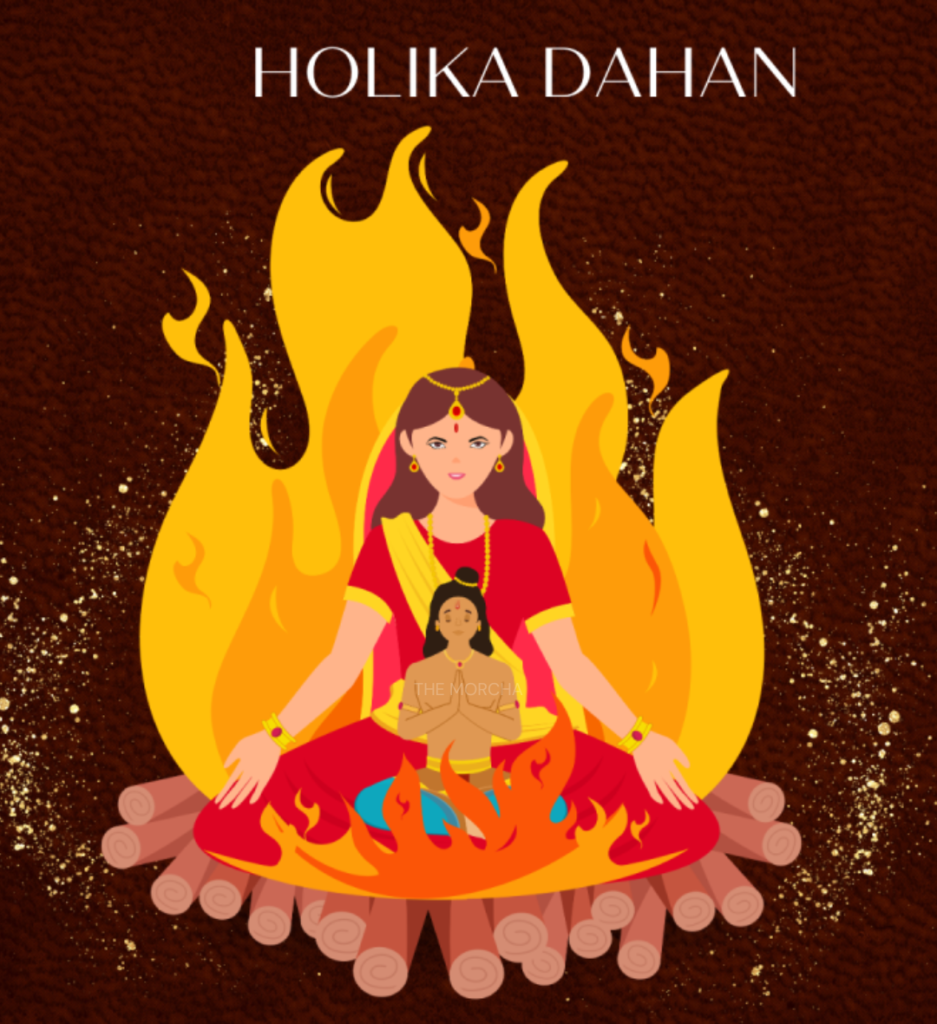
But Prahlad, his own son, continued to be an ardent devotee of Lord Vishnu. Enraged by his son’s faith, Hiranyakashipu plotted to kill him multiple times but failed due to divine protection. Finally, he sought the help of his sister Holika, who possessed a magical blessing that made her immune to fire.
The Story of Prahlad and the Symbolism of Faith
Holika agreed to sit in a blazing fire while holding Prahlad in her lap, believing she would survive while he would perish. However, because her intentions were evil and she misused her boon, divine intervention reversed the outcome. Holika was burned to ashes, while Prahlad remained unharmed due to his pure devotion. This story forms the foundation of Holika Dahan and conveys a timeless message: faith and righteousness ultimately defeat evil forces. The bonfire lit during Holika Dahan represents the burning of arrogance, hatred, and negativity.
Spiritual Meaning of the Sacred Fire
Fire holds immense spiritual significance in Hinduism. It is considered a purifier, a witness to sacred vows, and a medium through which offerings reach the divine. During Holika Dahan, the sacred fire symbolizes transformation and renewal. Devotees believe that by participating in the ritual, they can release emotional burdens, cleanse negative energies, and begin a new spiritual chapter. The flames remind individuals that destructive traits such as anger, jealousy, and ego must be eliminated for inner peace and growth.
Rituals and Ceremonies of Holika Dahan
The preparations for Holika Dahan begin several days before the festival. Communities collect wood, dried leaves, twigs, and cow dung cakes to build the pyre in open spaces. On the evening of the festival, priests determine the auspicious muhurat (timing) for lighting the bonfire. Families gather dressed in traditional attire, perform prayers, and offer grains, coconut, turmeric, and flowers into the fire. The ritual often includes chanting mantras and singing devotional songs that celebrate divine protection and spiritual victory.
Importance of Holika Dahan Muhurat
The timing of Holika Dahan is considered extremely important in Hindu astrology. It is performed after sunset during the full moon night, avoiding inauspicious periods such as Bhadra. Observing the correct muhurat is believed to enhance positive energies and ensure prosperity, health, and protection from negative influences. Astrologically, the full moon represents completeness and illumination, making it the perfect time to symbolically burn away darkness from life.
Parikrama and Sacred Offerings
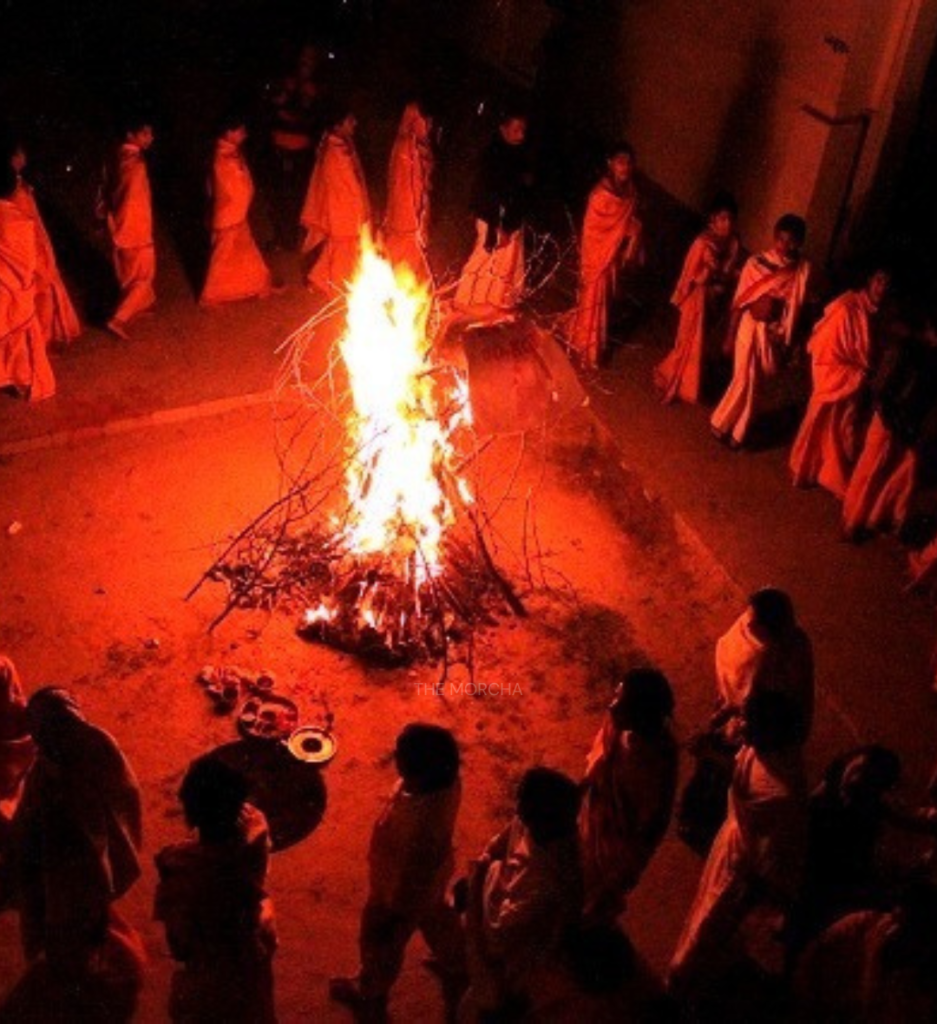
One of the central rituals of Holika Dahan is parikrama, or circumambulation of the fire. Devotees walk around the bonfire three or seven times, praying for well-being and success. During this ritual, offerings such as wheat, barley, mustard seeds, and coconut are placed into the flames. These offerings symbolize gratitude for agricultural abundance and hopes for prosperity in the coming year. In many rural communities, newly harvested crops are roasted in the fire and later consumed as blessings.
Agricultural and Seasonal Significance
Holika Dahan marks the transition from winter to spring and carries agricultural importance. The festival coincides with the harvesting season in many parts of India. Farmers celebrate the fertility of the land and pray for good yields. The heat of the bonfire also historically served a practical purpose, helping cleanse the environment during seasonal change when infections were common. Thus, Holika Dahan blends spiritual symbolism with agricultural and environmental awareness.
Regional Variations in India
Different regions of India celebrate Holika Dahan in unique ways. In North India, large community bonfires are common, accompanied by folk songs and dances. In Maharashtra, the festival is linked with Shimga celebrations. In West Bengal, it coincides with Dol Purnima, honoring Lord Krishna. In parts of South India, a similar ritual known as Kama Dahanam symbolizes the burning of desire. Despite regional variations, the central theme of spiritual purification remains consistent.
Social and Community Bonding
Holika Dahan strengthens social bonds by bringing communities together. Neighbors gather in shared spaces, exchange greetings, and forget past conflicts. The festival promotes unity, forgiveness, and mutual respect. In modern urban settings, resident welfare associations organize collective bonfires to foster harmony and community spirit. The shared ritual reinforces the idea that societal well-being depends on collective positivity.
Psychological and Emotional Cleansing
Beyond religious symbolism, Holika Dahan offers psychological benefits. The act of symbolically burning negative thoughts can have a powerful emotional impact. Many people write down their fears, regrets, or bad habits and mentally surrender them to the flames. This ritual can create a sense of release and renewal, encouraging individuals to embrace optimism and personal growth.
Environmental Awareness and Eco-Friendly Celebrations
In recent years, environmental concerns have influenced how Holika Dahan is celebrated. Excessive wood burning and pollution have prompted calls for eco-friendly practices. Many communities now promote smaller bonfires, use natural materials, and discourage the cutting of green trees. Awareness campaigns emphasize sustainability while preserving cultural traditions. Eco-conscious celebrations ensure that the festival remains meaningful without harming the environment.
Holika Dahan and Moral Lessons
Holika Dahan carries profound moral lessons for modern society. It teaches that misuse of power leads to downfall, arrogance invites destruction, and faith brings protection. The story of Prahlad inspires courage and devotion, reminding individuals to stand firm in their beliefs despite challenges. The festival encourages ethical living, humility, and compassion.
Connection Between Holika Dahan and Holi
Holika Dahan is intrinsically linked to Holi, the festival of colors celebrated the following day. While Holika Dahan focuses on spiritual purification, Holi represents joy, unity, and celebration. The sequence is symbolic: first eliminate negativity, then spread happiness. Together, these festivals promote a balanced approach to life, combining introspection with celebration.
Holika Dahan in Global Communities
Indian diaspora communities across the United States, United Kingdom, Canada, Australia, and other countries celebrate Holika Dahan with enthusiasm. Cultural organizations arrange community bonfires, cultural performances, and storytelling sessions to educate younger generations about the festival’s significance. These celebrations preserve cultural identity and promote cross-cultural understanding.
Scientific Perspective on the Festival
Some scholars suggest that the bonfire may have had scientific relevance in ancient times. The heat could help reduce bacteria and insects during seasonal change. Traditional herbs sometimes added to the fire may have released purifying fumes. Although modern science may not fully validate all beliefs, the festival’s timing aligns with natural cycles and environmental transitions.
Holika Dahan in Literature and Art
The story of Prahlad and Holika has inspired numerous works of art, theater, dance, and literature throughout Indian history. Classical paintings depict the dramatic scene of divine protection, while folk performances reenact the legend with music and dialogue. The festival’s narrative continues to influence storytelling traditions and spiritual discourse.
The Eternal Flame of Hope
Holika Dahan remains a timeless reminder that goodness ultimately prevails over evil. As communities gather around the sacred fire each year, they reaffirm their faith in righteousness, justice, and renewal. The glowing flames illuminate not only the night sky but also the human spirit, encouraging individuals to release negativity and embrace hope.
In a world often challenged by conflict and uncertainty, Holika Dahan stands as a powerful symbol of resilience, devotion, and the enduring victory of light over darkness.