
Cybersecurity has become one of the most important parts of modern digital life. From online banking and social media to business websites, cloud platforms, mobile applications, and government services, people depend on digital technology every day. As digital activity continues to grow, cyber threats are also becoming more sophisticated. Hackers, scammers, malware, phishing attacks, data theft, and identity fraud can affect individuals, businesses, and organizations. This makes Cybersecurity essential for protecting information, devices, networks, and digital identities.
Table of Contents
What Is Cybersecurity?
Cybersecurity refers to the practices, technologies, tools, and processes used to protect digital systems from unauthorized access, damage, theft, and disruption. It covers computers, smartphones, servers, networks, applications, websites, cloud systems, and sensitive information.
The main purpose of Cybersecurity is not only to stop hackers but also to reduce digital risks. A strong security system helps protect important information while allowing users to safely access the services they need.
Cybersecurity combines technology with human awareness. Even advanced security software can be weakened when users choose poor passwords, click suspicious links, or share confidential information with unknown people.
Why Cybersecurity Is Important Today
The internet has changed the way people communicate, work, shop, study, and manage money. This convenience also creates new security challenges. Personal information such as names, email addresses, phone numbers, passwords, financial details, and account credentials can become valuable targets for cybercriminals.
For businesses, a cyberattack can lead to data loss, financial damage, service interruptions, and loss of customer trust. For individuals, a compromised account can result in privacy problems or financial fraud. Therefore, Cybersecurity has become an important part of responsible digital participation.
Common Cybersecurity Threats
Cyber threats come in many different forms. Understanding common attacks can help people recognize suspicious activity before serious damage occurs.
Malware
Malware is malicious software designed to damage systems, steal information, or perform unauthorized activities. Viruses, worms, spyware, and ransomware are examples of malware. Malware can enter a device through unsafe downloads, infected files, suspicious websites, or compromised applications.
Phishing
Phishing is one of the most common online threats. Attackers may send fake emails, messages, or websites designed to look like legitimate services. The goal is often to trick users into revealing passwords, financial information, verification codes, or other sensitive details.
Ransomware
Ransomware is a type of malicious software that can block access to files or systems. Attackers may demand payment in exchange for restoring access. Organizations can reduce the impact of ransomware through security controls, regular backups, software updates, and employee awareness.
Password Attacks
Weak or reused passwords can make accounts easier to compromise. Attackers may use stolen credentials or automated techniques to attempt access to online accounts. Using strong and unique passwords is therefore an important part of Cybersecurity.
Identity Theft
Identity theft occurs when someone obtains and misuses another person’s personal information. Stolen information may be used for fraudulent activities or unauthorized account access. Protecting personal information and monitoring accounts can help reduce this risk.
Cybersecurity and Personal Privacy
Privacy has become increasingly important in the digital age. People share information with websites, applications, social media platforms, online stores, and digital services. Cybersecurity helps protect this information from unauthorized access. However, security and privacy are not exactly the same thing.
Security focuses heavily on protecting systems and information from threats, while privacy also concerns how information is collected, used, stored, and shared. Users should therefore understand the permissions requested by applications and avoid sharing unnecessary personal information online.
Cybersecurity for Businesses
Businesses of every size depend on digital technology. A small company may use email, online payments, cloud storage, websites, and social media, while larger organizations may operate complex networks and databases. A security incident can interrupt business operations and expose confidential information.
Businesses can strengthen Cybersecurity by using access controls, secure authentication, software updates, employee training, backups, monitoring, and incident-response procedures. Security should not be treated as a one-time activity. It requires continuous attention because threats and technologies continue to change.
The Role of Strong Passwords
Passwords remain an important layer of account security. A strong password should be difficult to guess and should not be reused across multiple important accounts. For highly sensitive services, users should also enable multi-factor authentication whenever available.
Multi-factor authentication adds another verification step, making it harder for an attacker to access an account using only a stolen password. Password managers can also help users create and manage unique passwords without needing to memorize every password.
Multi-Factor Authentication and Online Safety
Multi-factor authentication, commonly called MFA, provides additional protection by requiring more than one form of verification. For example, after entering a password, a user may need to provide a code, approve a login request, or use another authentication method. MFA can reduce the risk associated with stolen passwords. It is especially useful for email accounts, financial services, social media accounts, business systems, and other important platforms.
Cybersecurity in the Workplace
Employees play an important role in an organization’s security. A single unsafe click can sometimes create serious problems for a business. Companies can conduct regular security awareness training to teach employees how to identify suspicious emails, fake websites, unsafe downloads, unusual login requests, and social engineering attempts.
Employees should also understand company policies related to passwords, devices, confidential information, and remote work. Creating a security-aware workplace can reduce many avoidable risks.
Cybersecurity and Artificial Intelligence
Artificial Intelligence is changing the cybersecurity landscape. AI-based systems can help security teams analyze large amounts of data, identify unusual behavior, detect suspicious activity, and respond to certain threats more quickly. At the same time, cybercriminals can also use advanced technologies to create more convincing scams, automate attacks, or produce misleading content.
This means Cybersecurity professionals must continuously adapt to technological changes.The future of digital security will likely involve a combination of artificial intelligence, automation, human expertise, and strong security policies.
Cybersecurity in Cloud Computing
Cloud computing has become an important part of modern technology. Businesses and individuals use cloud services for storage,software, collaboration, and data management. Cloud systems can provide powerful security features, but users and organizations still need to configure them correctly. Access permissions, authentication, encryption, monitoring, backups, and regular security reviews are important elements of cloud security. Organizations should understand which security responsibilities belong to the cloud provider and which remain with the customer.
Cybersecurity and Mobile Devices
Smartphones contain a large amount of personal information. Emails, photos, banking applications, social media accounts, contacts, and documents may all be accessible through one device.
Keeping mobile software updated, using screen locks, installing applications from trusted sources, reviewing permissions, and avoiding suspicious links can improve mobile security. Users should also be careful when connecting to unknown networks or sharing devices with others.
Cybersecurity for Students
Students are increasingly dependent on digital platforms for education. Online classes, learning applications, email accounts, cloud documents, and social media are all part of modern student life. Students should learn basic Cybersecurity practices at an early stage.
Using strong passwords, enabling MFA, avoiding suspicious links, protecting personal information, and keeping devices updated are simple habits that can provide meaningful protection. Cybersecurity education can also introduce students to future career opportunities in technology and information security.
Cybersecurity Careers and Skills
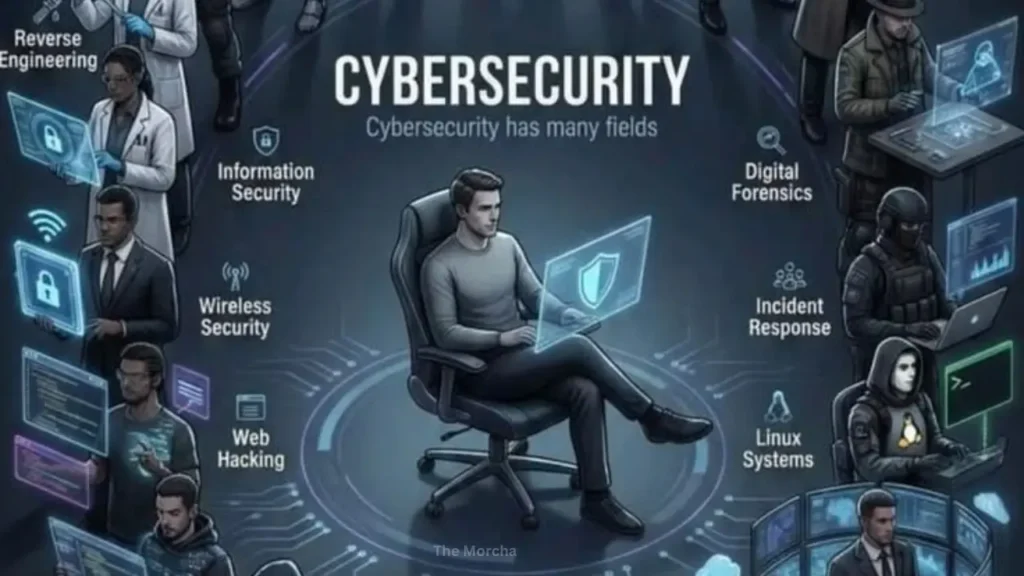
The growing importance of digital security has created demand for professionals with cybersecurity knowledge. Career paths may include security analyst, ethical hacker, penetration tester, security engineer, incident responder, security consultant, cloud security specialist, and digital forensics professional.
People interested in this field can develop skills in networking, operating systems, programming, databases, cloud computing, risk management, and security tools. Continuous learning is particularly important because cybersecurity techniques and threats change rapidly.
How to Stay Safe Online
Individuals can follow several practical habits to improve their digital security.
- Use strong and unique passwords.
- Enable multi-factor authentication.
- Keep operating systems and applications updated.
- Avoid clicking unknown links.
- Do not download files from suspicious sources.
- Check website addresses before entering sensitive information.
- Use secure and trusted networks for important activities.
- Review application permissions regularly.
- Back up important files.
- Be careful about sharing personal information.
Monitor your financial and online accounts for any unusual activity. These simple practices can make everyday digital activities safer.
The Importance of Software Updates
Software updates are not only about adding new features. They can also include important security fixes. Cybercriminals may attempt to exploit weaknesses in outdated software. Keeping operating systems, browsers, applications, and security tools updated can reduce exposure to known vulnerabilities. Automatic updates can be useful when available, although users should still pay attention to important security notifications.
The Future of Cybersecurity
The digital world is continuing to expand through AI, cloud computing, smart devices, connected systems, digital payments, and automation. As more devices and services become connected, the need for Cybersecurity will continue to grow.
Future security systems may use advanced analytics, AI-assisted monitoring, stronger authentication methods, improved encryption, and automated threat detection. However, technology alone will not solve every security problem. Human awareness, responsible behavior, effective policies, and continuous education will remain essential.
Cybersecurity and Digital Responsibility
Being safe online is not only the responsibility of technology companies or security professionals. Every internet user has a role to play. People should think carefully before clicking links, downloading files, sharing personal information, or approving unknown login requests. Businesses should protect customer information and prepare for possible security incidents.
Educational institutions can teach students about responsible digital behavior. Governments and technology organizations can also contribute through security standards, awareness programs, research, and cooperation. Digital responsibility becomes stronger when everyone understands that online safety is a shared responsibility.
Why Cybersecurity Awareness Matters
Many cyber incidents begin with simple mistakes. A person may click a fake link, reuse a password, download an unsafe file, or share a verification code without realizing the consequences. Cybersecurity awareness helps users recognize these risks.
Regular awareness campaigns and practical education can make digital safety easier to understand. Instead of assuming that security is only a technical issue, people can treat it as an everyday habit. The more informed users become, the better prepared they are to identify suspicious behavior.
Building a Safer Digital Future
Technology provides enormous opportunities, but those opportunities depend on trust and security. People need confidence that their information is protected when they communicate, shop, study, work, and make payments online. Strong Cybersecurity can support this trust by protecting digital systems and reducing the impact of cyber threats. A safer digital future will require cooperation between technology companies, businesses, governments, educational institutions, security professionals, and everyday users.
Cybersecurity is no longer an optional technology concept. It has become an essential part of modern digital life. From protecting personal accounts and smartphones to securing business networks and cloud systems, cybersecurity plays an important role in maintaining trust and safety online.
With the advancement of technology, cyber dangers will keep on evolving. At the same time, new security technologies and better awareness can help users respond to these challenges. By using strong passwords, enabling multi-factor authentication, keeping software updated, avoiding suspicious links, protecting personal information, and learning about digital risks, people can build safer online habits.
The future of technology should not only be about becoming more connected and powerful. It should also be about becoming more secure, responsible, and resilient. Cybersecurity will remain a powerful foundation for that future.