
Manipur, a culturally rich yet politically sensitive state in India’s northeast, has once again been pushed into turmoil following a tragic bomb blast that reignited public anger and unrest. For months, the region had been slowly recovering from earlier waves of ethnic violence, with signs of normalcy beginning to return in daily life, markets reopening, and communities cautiously rebuilding trust. However, this fragile peace was abruptly shattered by a sudden act of violence that not only claimed innocent lives but also reopened emotional wounds that had barely begun to heal.
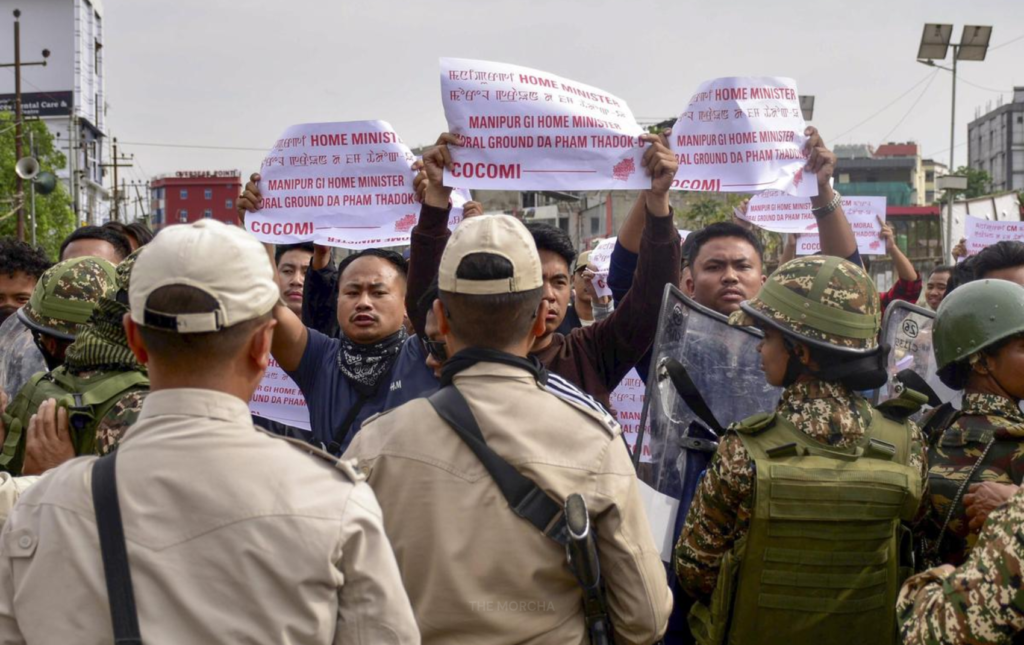
The incident has triggered widespread protests, with thousands of citizens pouring onto the streets in anger and grief, demanding justice and accountability. What makes this situation particularly serious is that it reflects not just a reaction to a single event but a deeper frustration rooted in long-standing issues of security, governance, and unresolved conflict. The unfolding events highlight how quickly stability can collapse in regions where underlying tensions remain unaddressed.
Table of Contents
What Happened and Why It Matters
The immediate cause of the unrest was a bomb explosion reported in Manipur’s Bishnupur district, specifically in the Ngangkha Lawai area, where two children tragically lost their lives. The loss of young lives has amplified the emotional weight of the incident, turning it into a symbol of the ongoing vulnerability faced by civilians in the region. While details about the perpetrators and motives are still under investigation, the attack underscores the persistent presence of militant activities and the challenges faced by security forces in completely neutralizing such threats.
The fact that the victims were children has made the incident particularly disturbing, as it highlights how violence in conflict-prone areas often spares no one. This has intensified public outrage, as people question how such an incident could occur despite the presence of security measures and whether enough is being done to prevent such tragedies.
Grief Turning into Protest
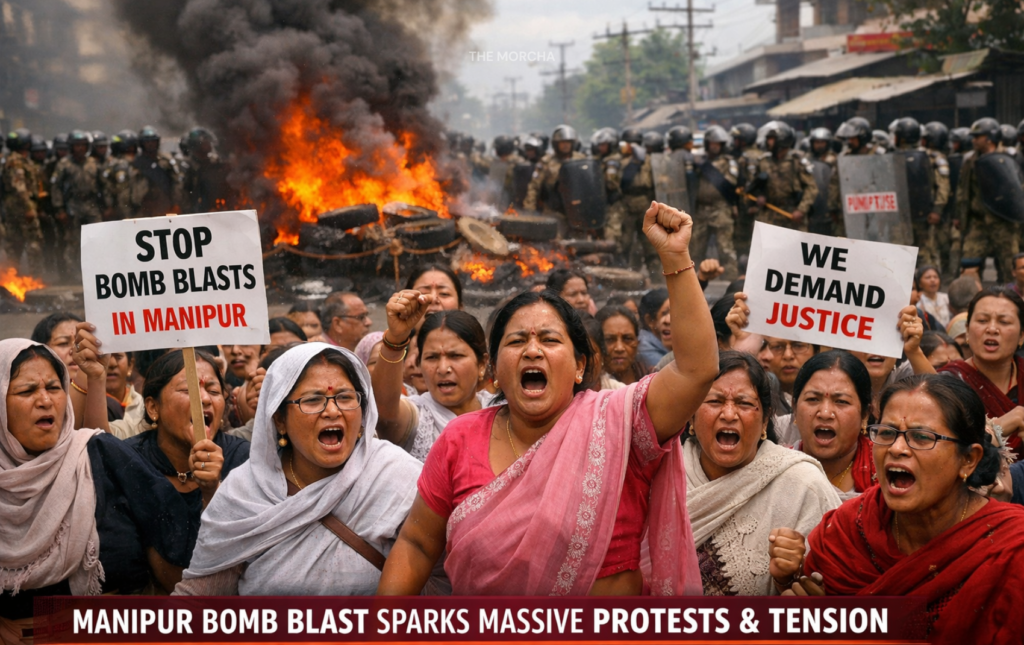
The emotional response from the public has been immediate and powerful, with grief quickly transforming into organized protest. Families, students, and local residents have come together not only to mourn the victims but also to express their anger at what they perceive as systemic failures. The protests are driven by a sense of injustice and a belief that authorities have not done enough to ensure safety. This collective emotional response is significant because it reflects a broader sentiment of frustration that goes beyond the specific incident.
It shows that people are not only reacting to the loss of life but are also voicing long-standing concerns about insecurity, lack of accountability, and repeated cycles of violence. Such emotional intensity often becomes the driving force behind large-scale movements, as it unites individuals across different backgrounds around a shared cause.
Scale and Spread of Protests
The protests that followed the incident have been widespread, covering multiple districts including Imphal East, Imphal West, Kakching, and Bishnupur. Thousands of people have taken part in demonstrations, blocking roads, organizing rallies, and raising slogans demanding justice. The scale of these protests indicates that the issue has resonated deeply across the state, cutting across community and regional lines. Unlike smaller, localized demonstrations, these protests represent a broader mobilization of public sentiment, suggesting that dissatisfaction is widespread and not limited to a particular group. The ability of the protests to spread so quickly also highlights the role of communication networks and community organizations in mobilizing people.
Symbolism and Resistance
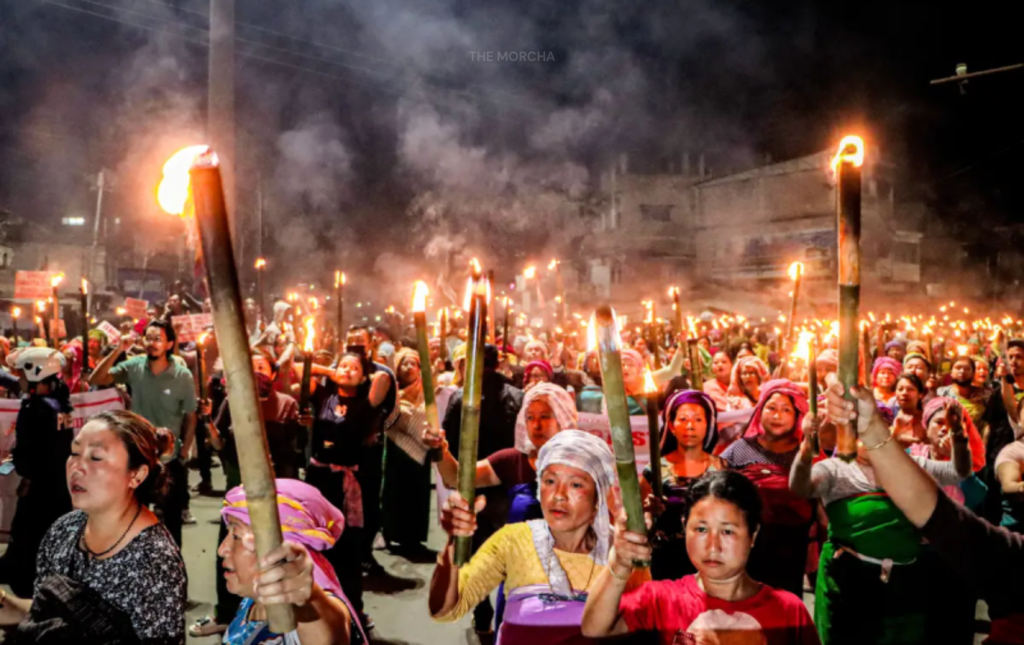
One of the most notable features of the protests has been the organization of night rallies, where participants march with candles and torches. These rallies carry strong symbolic meaning, representing both mourning for the victims and a form of resistance against ongoing violence. The use of light in darkness serves as a powerful metaphor for hope and the demand for justice. Night rallies also create a sense of unity among participants, as people come together in large numbers to show solidarity. The visual impact of these gatherings has drawn significant media attention, further amplifying the message of the protesters and ensuring that the issue remains in the public eye.
Role of Civil Society Organizations
Civil society groups such as AMUCO and COCOMI have played a crucial role in organizing and guiding the protests. These organizations have a history of involvement in social and political issues in Manipur, and their leadership has helped channel public anger into structured demonstrations. By coordinating rallies, issuing statements, and articulating demands, these groups have ensured that the protests remain focused and impactful. Their involvement also lends credibility to the movement, as they represent established voices within the community. This structured approach is important in maintaining the momentum of the protests while avoiding unnecessary chaos.
Confrontations with Security Forces
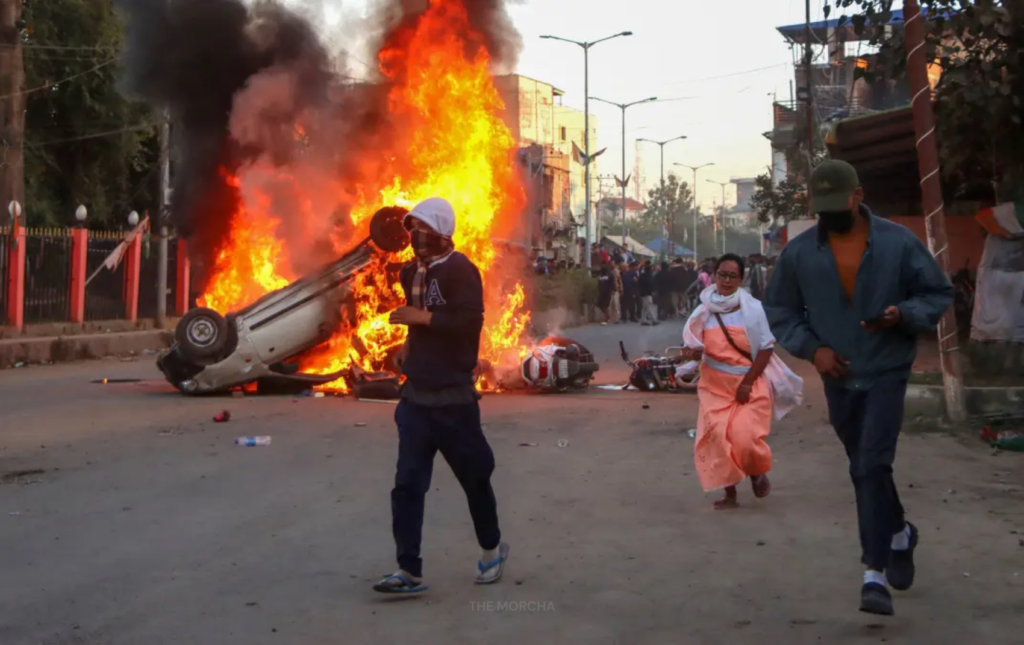
As protests intensified, confrontations between demonstrators and security forces became increasingly common. In several areas, authorities used crowd-control measures such as tear gas to disperse gatherings, leading to tense situations and occasional clashes. While security forces argue that such actions are necessary to maintain order, protesters often view them as excessive and unjustified. These confrontations highlight the delicate balance between maintaining law and order and respecting the right to protest. When not handled carefully, such situations can escalate tensions further, creating a cycle of action and reaction that complicates efforts to restore peace.
Impact on Daily Life and Economy
The widespread protests have significantly disrupted daily life in Manipur, affecting transportation, businesses, and educational institutions. Road blockades and demonstrations have made it difficult for people to travel, while many shops and markets have been forced to close temporarily. Schools and colleges have also been impacted, with students facing interruptions in their education. These disruptions highlight the broader consequences of unrest, extending beyond the immediate issue to affect the economy and social stability. For many residents, the situation presents a difficult choice between participating in protests and maintaining their livelihoods.
Historical Background of Conflict
Manipur’s current situation cannot be understood without considering its historical context, which includes decades of ethnic tensions, political disputes, and insurgent activities. Different communities in the state have long-standing grievances related to identity, representation, and access to resources. These issues have occasionally erupted into violence, creating a cycle of conflict that is difficult to break. The recent bomb blast and protests are therefore part of a larger pattern, rather than isolated events. Understanding this context is essential for developing effective solutions that address the root causes of unrest.
Key Demands of Protesters
The protesters have put forward several demands, with justice for the victims being the most immediate. They are calling for a thorough and transparent investigation, as well as the arrest and punishment of those responsible. In addition, there are demands for stronger security measures and action against militant groups. Some groups have also raised broader issues related to governance and policy changes, reflecting a desire for long-term solutions. These demands highlight the complexity of the situation, as they go beyond immediate concerns to address deeper systemic issues.
Political Reactions and Debate
The situation has sparked political reactions at both state and national levels, with leaders issuing statements condemning the violence and expressing sympathy for the victims. However, there has also been criticism of the government’s handling of security and the overall situation in Manipur. Opposition parties have questioned whether sufficient measures are being taken to prevent such incidents. This political debate adds another dimension to the crisis, influencing public perception and potentially shaping future policy decisions.
Security Challenges in Manipur
Maintaining security in Manipur is particularly challenging due to its geographical location, diverse population, and history of insurgency. The presence of armed groups, combined with difficult terrain, makes it hard for security forces to monitor all areas effectively. The recent incident has once again highlighted these challenges, raising questions about intelligence gathering and response capabilities. Addressing these issues requires not only stronger security measures but also better coordination between different agencies.
Role of Media and Information Flow
Media coverage has played a significant role in bringing attention to the protests and the underlying issues. News channels and social media platforms have provided updates, images, and videos, helping to spread awareness. However, the rapid flow of information also carries the risk of misinformation, which can further inflame tensions. Responsible reporting and verification of facts are therefore essential in such situations to ensure that the public receives accurate information.
Humanitarian Concerns
The situation raises serious humanitarian concerns, particularly regarding the safety and well-being of civilians. Families affected by violence face emotional trauma, while the general population يعيش in an atmosphere of fear and uncertainty. Children, in particular, are vulnerable, as they are directly affected by both the violence and the disruptions to daily life. Providing support to affected communities is an essential part of the response to the crisis.
Government Response and Actions
The government has taken steps such as deploying additional security forces and initiating investigations into the incident. Officials have assured the public that those responsible will be brought to justice. However, many people remain skeptical, as similar assurances have been made in the past. This gap between promises and outcomes is a major factor contributing to continued protests and public dissatisfaction.
Challenges in Achieving Lasting Peace
Achieving lasting peace in Manipur is a complex task that requires addressing deep-rooted issues such as ethnic tensions, political representation, and economic disparities. Short-term measures may help control immediate unrest, but long-term stability depends on comprehensive strategies that involve all stakeholders. Without addressing these underlying factors, the cycle of violence and protest is likely to continue.
Importance of Dialogue and Community Trust
Building trust between communities and between the public and the government is essential for long-term peace. Dialogue, transparency, and inclusive decision-making can help bridge divides and create a sense of shared responsibility. Community leaders, civil society organizations, and government officials all have a role to play in this process. Without trust, even well-intentioned policies may fail to achieve their goals.
A Critical Moment for Manipur
The recent protests in Manipur represent a critical moment for the state, highlighting both the urgency of immediate action and the need for long-term solutions. While the demand for justice is central to the current movement, the broader goal must be to create a stable and secure environment where such incidents do not occur.
Achieving this will require sustained effort, cooperation, and a commitment to addressing the root causes of conflict. The path forward is challenging, but it is essential for ensuring a peaceful and prosperous future for the people of Manipur.