
150 Years of Vande Mataram — in the chronicle of India’s cultural and political journey, few creations have stirred the nation’s heart as deeply as this timeless anthem. More than a poem or melody, it has been the pulse of patriotism — a declaration of devotion that united a colonized people under one banner of motherly love.
As India celebrates 150 years of Vande Mataram in 2025, it is more than an anniversary. It is a moment of reflection — on the words that once ignited rebellion, the spirit that inspired unity, and the vision of love for the motherland that still beats within the nation’s collective soul.
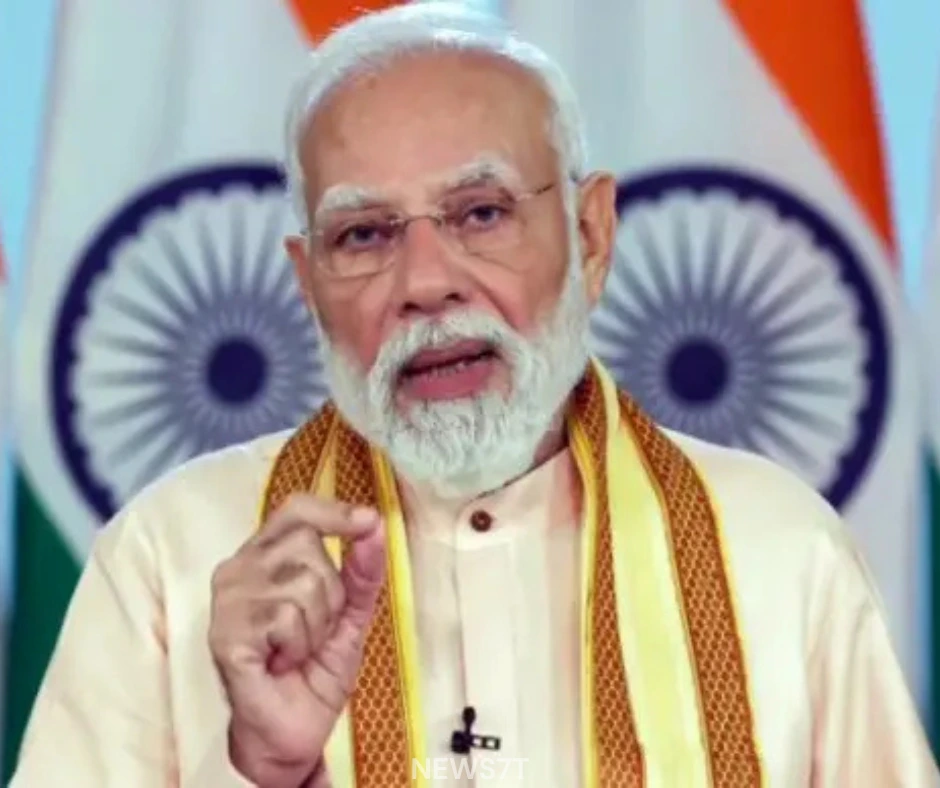
Table of Contents
The Birth of a National Emotion
The journey of Vande Mataram began in 1875 when Bankim Chandra Chattopadhyay, one of the most luminous figures of Bengali literature, composed it in a blend of Sanskrit and Bengali. A few years later, in 1882, he wove it into his celebrated novel Anandamath — a narrative of monk-warriors rising against tyranny. At the core of this novel lay a divine idea — Bharat Mata, the spiritual embodiment of India as a nurturing and courageous mother. The song’s refrain, meaning “I bow to thee, Mother,” transcended fiction to become an anthem of awakening.
Bankim Chandra, a visionary thinker and fervent nationalist, saw poetry as resistance. At a time when the British Raj forbade any expression of patriotism, Vande Mataram became a coded prayer of liberation — graceful in expression, yet revolutionary in intent.
The Sacred Meaning Behind the Verses
At its heart, Vande Mataram is poetry that worships the land. Its verses glorify India as fertile, green, and generous — a mother whose rivers glisten and whose fields yield abundance. The imagery is lush and sacred, painting the nation not as territory, but as divinity wrapped in nature’s beauty.
The original Sanskrit lines praise the land touched by monsoon winds and filled with harvests. Though simple in sound, the song’s words awaken pride and gratitude. They transform patriotism into prayer — a quiet surrender to the mother who feeds and shelters all her children. This intertwining of spirituality and nationalism gave India not just a slogan but a soul.
From Song to Symbol of Rebellion
The transition of Vande Mataram from the pages of literature to the lips of revolutionaries began in 1896, when Rabindranath Tagore first sang it at the Indian National Congress in Calcutta. The audience, moved to tears, realized they were witnessing the birth of the freedom movement’s song.
Soon, its echo spread across India. It appeared in pamphlets, was whispered in closed meetings, and roared in protests. During the Swadeshi Movement of 1905, Vande Mataram became the rallying cry in the fight against the partition of Bengal. Men and women alike filled the streets of Calcutta, their voices rising against imperial rule.
The British colonial government, threatened by its influence, banned the song. But every act of suppression only strengthened its appeal. To utter “Vande Mataram” in public became an act of valor — a declaration of spiritual independence before political freedom was won.
The Song’s Role in the Freedom Struggle
Between 1905 and 1947, Vande Mataram evolved into the heartbeat of India’s freedom movement. Revolutionaries carried it in their hearts and on their tongues as they faced imprisonment and death. For many, it became their final whisper before martyrdom.
Protest marches would begin with the rhythmic chant:
“Vande!” — shouted by one group,
“Mataram!” — answered by another.
This call-and-response echoed through lanes, schools, temples, and town squares, transforming ordinary citizens into fearless patriots.
Mahatma Gandhi regarded 150 years of Vande Mataram as holy, reminding people that even after 150 years of Vande Mataram, its devotion represented love for the nation, not religion. Despite debates over its imagery, 150 years of Vande Mataram remained the purest expression of unity, where all Indians, regardless of faith, could honor their shared motherland. Truly, 150 years of Vande Mataram continue to inspire generations.
By independence, Vande Mataram had become more than a patriotic hymn — it was an eternal vow.
From Anthem to National Legacy
In 1949, during the drafting of India’s Constitution, the nation’s leaders faced a historic decision — to choose its musical symbols. The debate was profound: should Vande Mataram become the national anthem, or remain an honored national song?
The solution was one of balance and respect. Jana Gana Mana, written by Tagore, was chosen as the national anthem due to its universality. Yet, Vande Mataram was given an equally exalted place as the National Song of India. On 24 January 1950, the Constituent Assembly officially honored Vande Mataram, forever embedding it in the Republic’s heritage.
Eternal Melodies and Musical Evolution
The song’s power has never faded — only found new forms. Tagore’s classical composition, set in Raag Desh and Raag Kafi, remains the most iconic rendition. Over time, other maestros gave it their own voice — from M. S. Subbulakshmi’s devotional grace to Lata Mangeshkar’s stirring patriotism.
In 1997, as India marked 50 years of independence, A. R. Rahman reimagined the song for a global audience. His modern arrangement fused Indian classical notes with contemporary orchestration, making Vande Mataram resonate once again among the nation’s youth. It became a bridge between generations — from the freedom fighters of the 1900s to the digital dreamers of the 21st century.
The Debates and Misunderstandings
Like many national symbols, Vande Mataram has not escaped controversy. Some argue that its religious allusions to goddess imagery may not align with all faiths. The debate, however, often overlooks the poet’s intent — to honor the land, not to impose worship.
Scholars and leaders have long clarified this nuance. To sing Vande Mataram is not to praise a deity but to celebrate the motherland’s spirit. The Supreme Court too has ruled that while singing it is voluntary, respecting it as a national legacy is a moral duty.
Thus, despite occasional conflicts, the song remains a unifying melody of gratitude, not division.
Vande Mataram in 2025
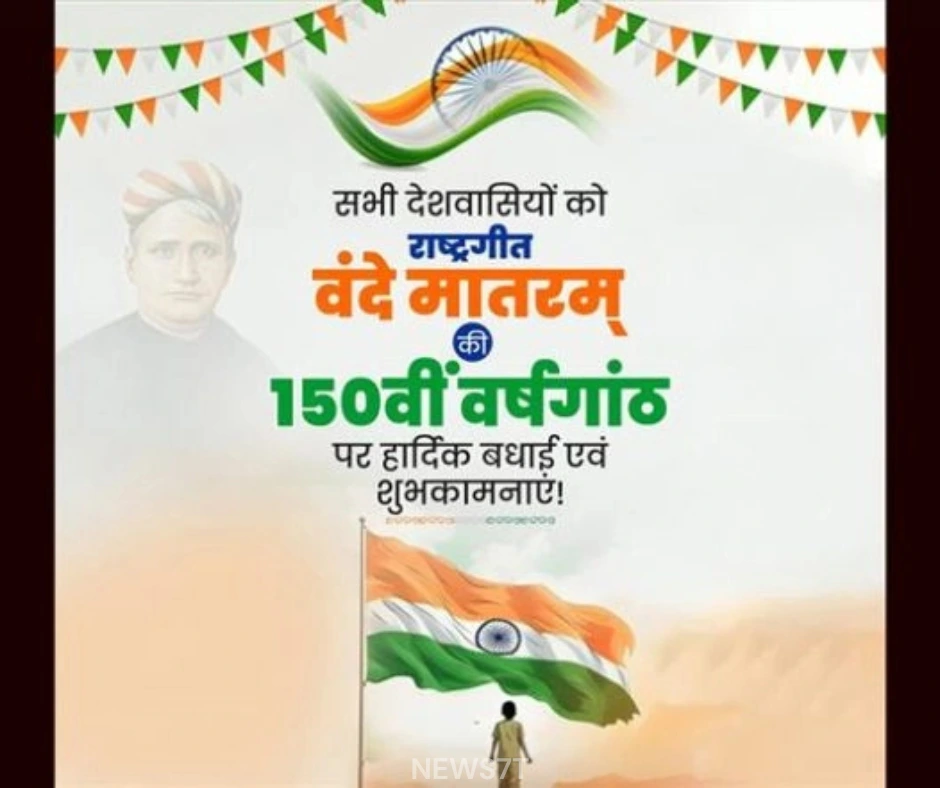
This year, 2025, marks a monumental occasion — 150 years since Bankim Chandra’s immortal creation. Across India, public celebrations and cultural events are rekindling its glory. From Delhi to Chennai and Mumbai to Kolkata, cities are alive with commemorations. The government has launched special coins and stamps featuring Bankim’s portrait. In schools and universities, students perform recitations, debates, and musical tributes inspired by the hymn’s message.
In New Delhi, Prime Minister Narendra Modi inaugurated a year-long commemoration, describing Vande Mataram as the “sacred expression of India’s soul.” On social media, hashtags such as #VandeMataram150 and #BankimChandra have taken over timelines, uniting voices in digital rhythm just as the song once united revolutionaries in the streets. These celebrations prove that even after a century and a half, the song remains India’s emotional anthem — not because of politics, but because of identity.
Why Vande Mataram Still Resonates
In an age marked by global chaos and divided ideologies, Vande Mataram reminds every Indian of a common heartbeat. It urges us to find unity in diversity and strength in togetherness.
The song carries timeless lessons:
- Harmony in Difference: It calls upon Indians of all cultures and religions to see themselves as children of one mother.
- Respect for Nature: Through its descriptions of rivers, crops, and forests, it encourages ecological reverence.
- Courage and Action: It calls citizens to serve the nation not just through words, but deeds of integrity and compassion.
For today’s youth, it is both a reminder and a challenge — that patriotism is not mere emotion, but responsibility.
Cultural and Global Influence
As the world celebrates 150 years of Vande Mataram, its spirit has crossed borders, inspiring scholars, artists, and dreamers. Even after 150 years of Vande Mataram, the song remains a timeless symbol of devotion and freedom, proving how art can ignite revolution.
Across the diaspora — from the United States to Singapore — communities honor 150 years of Vande Mataram through dance, music, and film. Every note performed in celebration of 150 years of Vande Mataram echoes its enduring pride. From online stages to cultural festivals, 150 years of Vande Mataram continue to pay tribute to the motherland. Truly, 150 years of Vande Mataram remind us of India’s spirit, legacy, and unity.
The Eternal Salutation
As India celebrates 150 years of Vande Mataram, the song still echoes with the same reverence — a whisper and a roar that say, “I bow to thee, Mother.” Even after 150 years of Vande Mataram, its spirit remains timeless, reminding us of who we are and what we stand for.
150 years of Vande Mataram is not just history — it’s a heartbeat of devotion, a pledge to protect the nation’s harmony and pride. Today, as the world races ahead, 150 years of Vande Mataram remind us to pause, to belong, and to bow once more to the Mother who gave us everything.
Every time it is sung, it reminds us of the sacrifices engraved in freedom’s history. It tells each Indian child — remember your mother, her soil, her rivers, and her truth.
So, as the nation stands proud in 2025, let the words echo again across every heart and horizon:
Vande Mataram!
I bow to thee, Mother — forever glorious, forever soulful, forever divine.